
How to Get Lost on Purpose: A Guide for Urban Curious Explorers
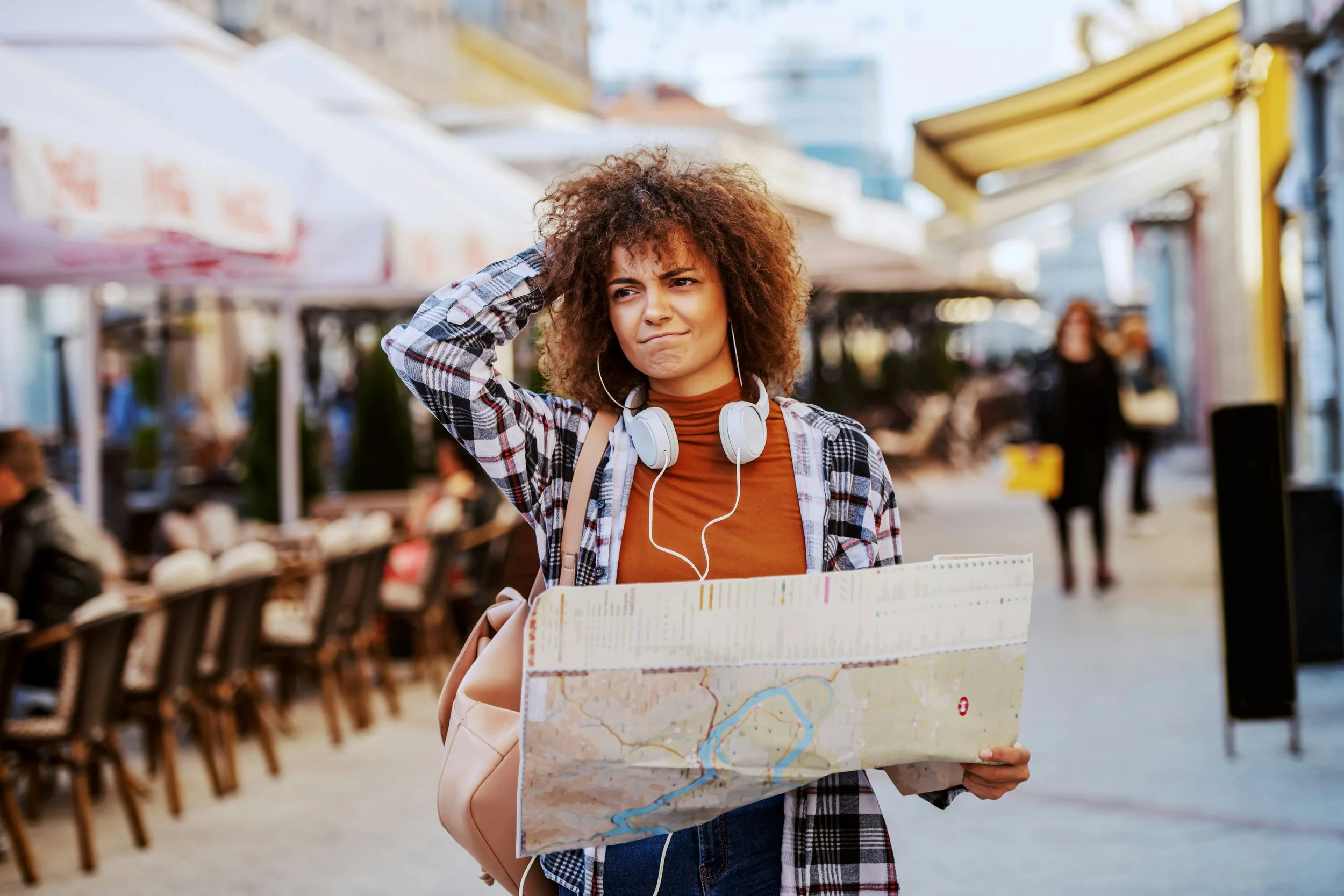
Recently, when I visited a new neighbourhood in Copenhagen, I repeated the tendency my kids and husband shake their heads at: I let my phone battery run down to nil. I’m not saying it was on purpose. But maybe, subconsciously, it was.
After all, my favourite memories of travel are from the days before I had a smartphone or even a camera. Often, I was travelling with country-wide or even continent-wide travel guides, relying on comically vague maps printed within.
In every new city I visited, I learned to peg a few landmarks—clock towers, mountains, a body of water, a railway line—and to get a feel for the N-S-E-W of the place before setting out on an amble by foot. Scientific, this was not. Linear, it was not.
But some of my favourite experiences on a trip abroad—or even in a new area of my own city, Vancouver, Canada—come from re-creating that youngblood approach to urban wandering. I notice more, stop more, follow “shiny moments” more, letting them catch my eye: a bright scarf hanging in a window pane, a group of laughing kids disappearing at a run into a courtyard, a clanking trolley chugging up a hill. I strike up more conversations with strangers, too, and learn far more about the spirit of a place.
Therefore, my five “rules” for getting lost on purpose are:
Start with one or two anchors, not a route. Know where the water, railway line, mountain, tower or major street is, but resist plotting every turn before you begin. That way, you open yourself up to experiencing awe!
Let something small make the next decision. Follow the sound of music, an inviting laneway, a promising bakery window or a sudden burst of greenery rather than the pin on your phone. In fact, put it away completely—or better yet, leave it behind.
Go slowly enough to be interruptible. A purposeful amble leaves room to stop for reading a plaque, peering into a courtyard, studying an intriguing feature of the block, or answering a stranger who has decided to talk to you. I’m decidedly proud when someone assumes I’m a local.
Embrace the possibility of being mildly inconvenienced. Getting lost on purpose should not put you in danger, but a missed turn, a longer walk or an unplanned hill can be exactly what opens a city up to you in a new and wondrous way.
If you must have it with you, at least save the phone for finding your way home. Take a photo, jot a note or check your bearings when needed—but first give yourself a little time to see where your own curiosity leads. Better yet, strike up conversations with strangers. Recent research has found speaking with strangers makes everyone happier—even introverts. Cringe at the novelty; enjoy the results!
