
Top Learnings from Manila, Philippines: A Photo Essay

Out and About on the Streets of Manila with my Daughter — Spring Break Vacation!
I brought the wonderful new book Women Changing Cities by Chris Bruntlett and Melissa Bruntlett with me to the Philippines. I read the chapter on Manila when I first arrived. It filled me with optimism.
But as I moved through the city, many of those hopes began to unravel. These are the highlights and lowlights from my five-day stay in the city.
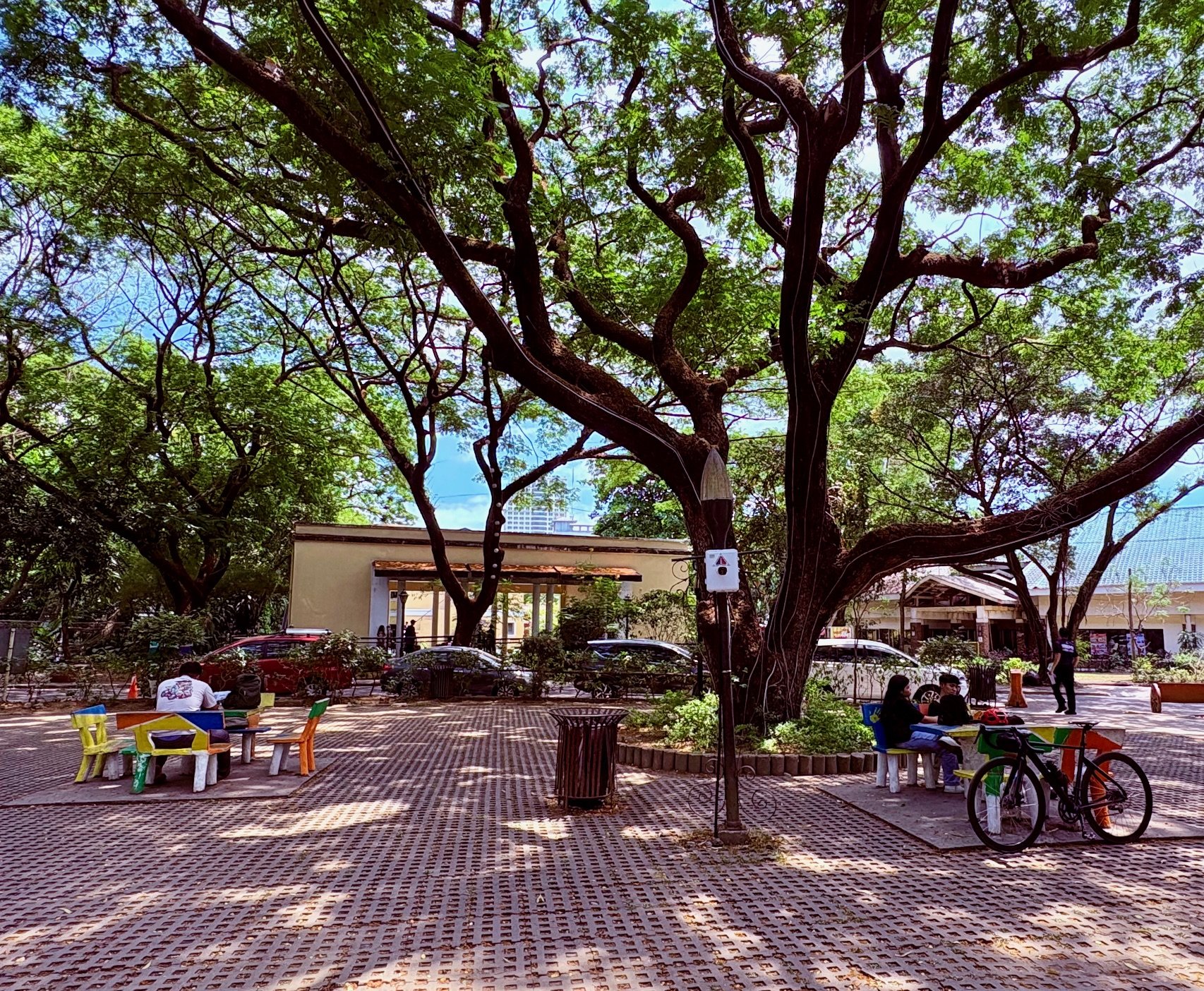
Manila’s progress on good planning principles has been iterative—and fragile
Photo by Emilie K adin
Many of the gains highlighted in Women Changing Cities have, unfortunately, unwound.
The bike lanes introduced along major corridors during the pandemic—when public transit shut down—lasted until December 2025. Then they disappeared.
In their place, the dominance of the automobile has returned with force. Cars are king. Public transit feels comparatively weak. Pedestrians are afterthoughts. Bikes are rare—and among the cyclists I did see, all were men, except for those on a guided bike tour that my daughter and I joined.
Even then, we did not feel safe. My 11-year-old and I rode through the old town with staff cycling alongside us, actively shielding us from traffic. It was less a leisurely ride than a coordinated effort at protection.
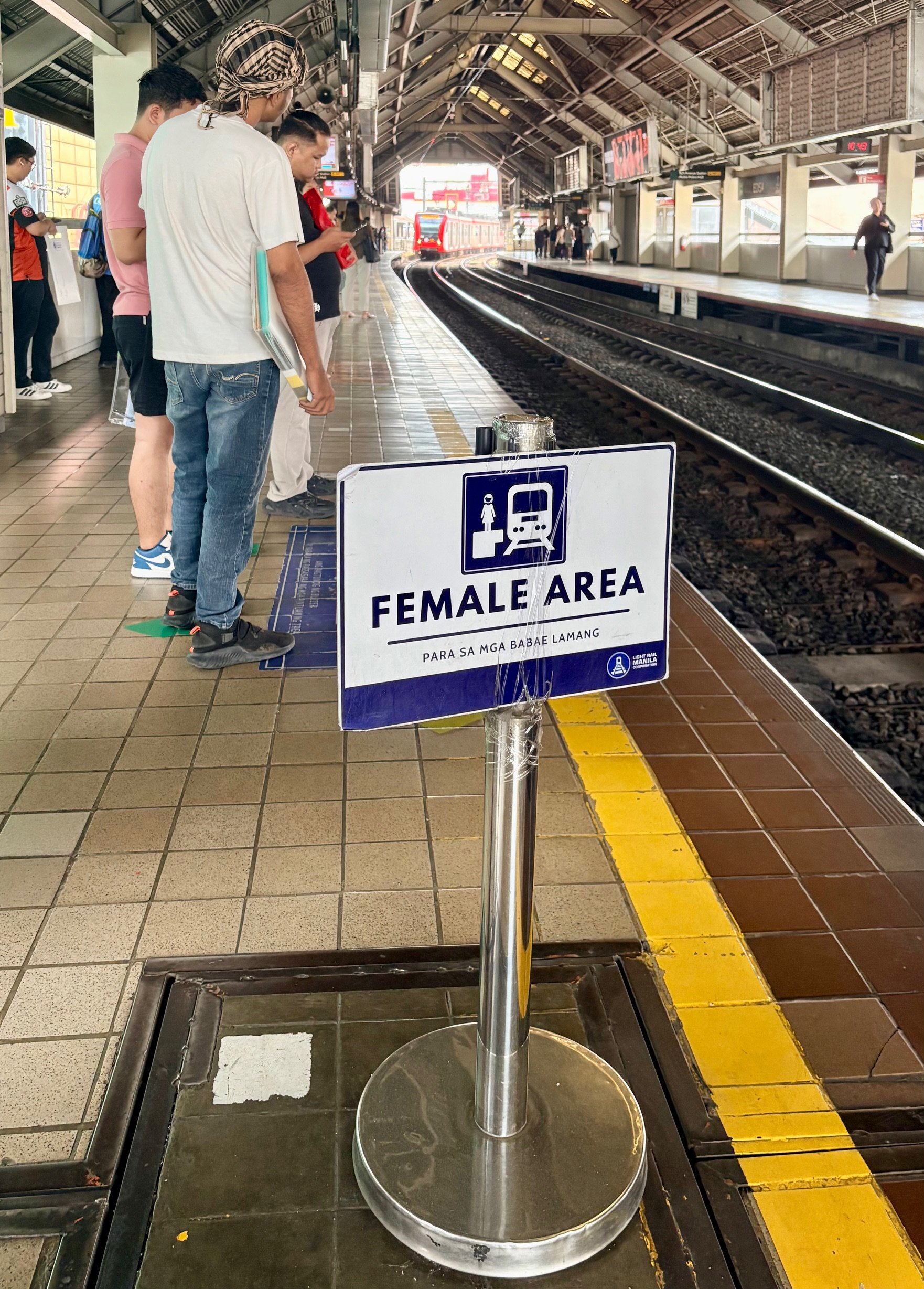
Some transit gains are holding on—but only just
Photo by emilie k adin
The “FEMALE AREA” on Manila’s Light Rail System exists. But unevenly.
In one car, it was clearly designated. In another, it had softened into suggestion: women outnumbered men roughly four to one, but the space was no longer actively enforced.
I found myself torn. The men present appeared to be elderly. Perhaps they, too, were seeking safety. And surely self-selected vulnerability matters.
But the erosion of these spaces also signals something else: that the barriers women face in fully accessing public transit have not, in fact, been resolved—only temporarily managed.
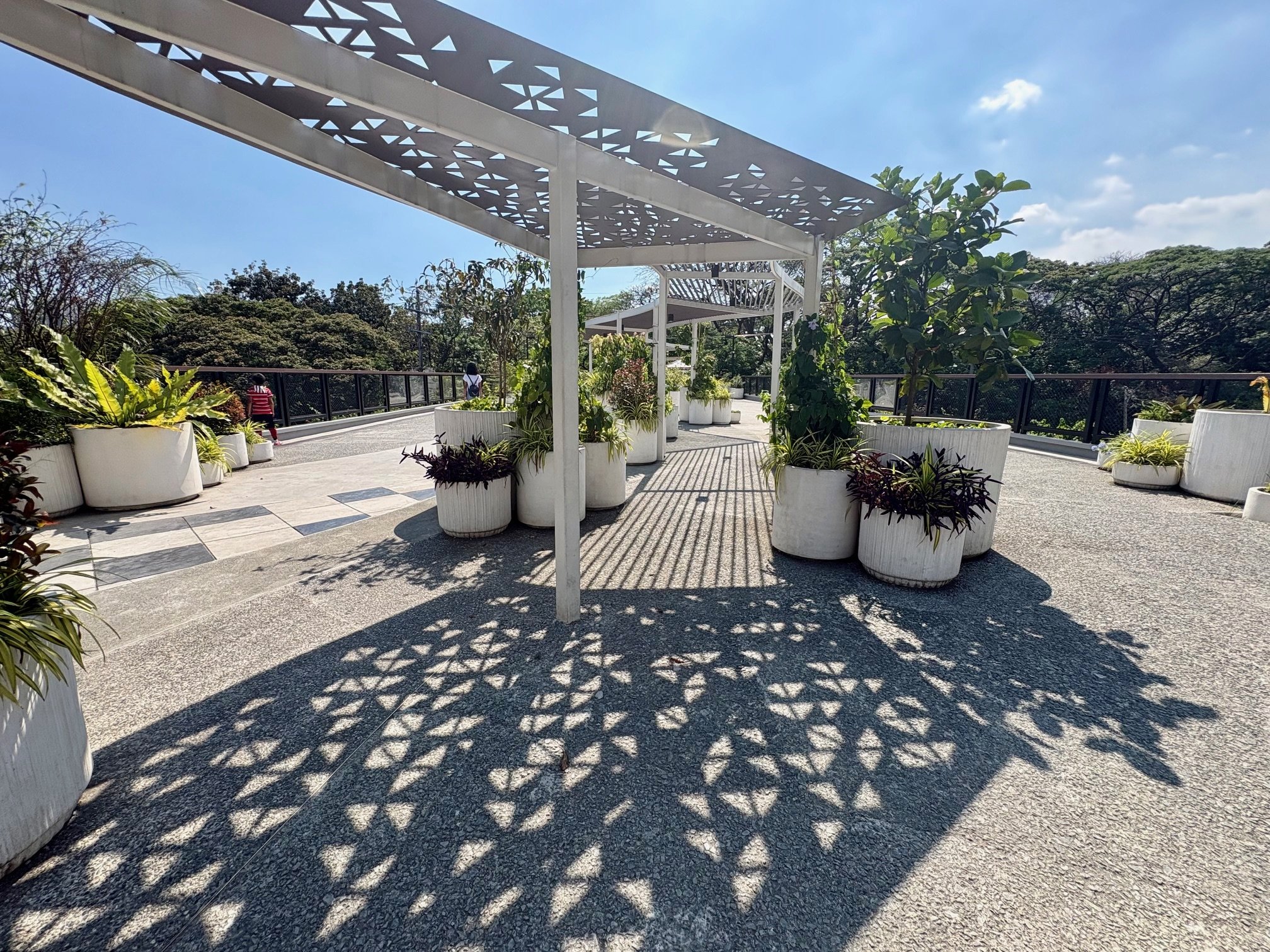
Rules can be broken—and sometimes should be
photo by emilie k adin
In North America, we tend to agree: pedestrian overpasses and underpasses are a mistake. They “kill the street.” These are the kinds of intervention that would have Jane Jacobs turning in her grave.
But Manila resists that orthodoxy.
As one of the densest cities in Southeast Asia—and one of the densest in the world—the conditions for “what makes for good urbanism” are different. Air pollution, inequality, and sheer intensity of use shift the equation. In Manila, those same overpasses and underpasses can feel like relief. A reprieve. A way to move safely through the city.
Good planning, it turns out, is not about rigid adherence to rules—but about knowing when to bend them.

Layered urban forms tell the story of empire
photo by emilie k adin
Manila is one of the clearest examples in Asia of how successive colonial regimes shape a city. Each has left its mark—planning ideas, architectural styles, infrastructure—persisting long after the empire itself has gone.
The result is not coherence but accumulation: Spanish fortress urbanism, a brief British occupation, American City Beautiful ideals, Japanese wartime destruction, and postwar auto-centric reconstruction. All of it, still shaping daily life.
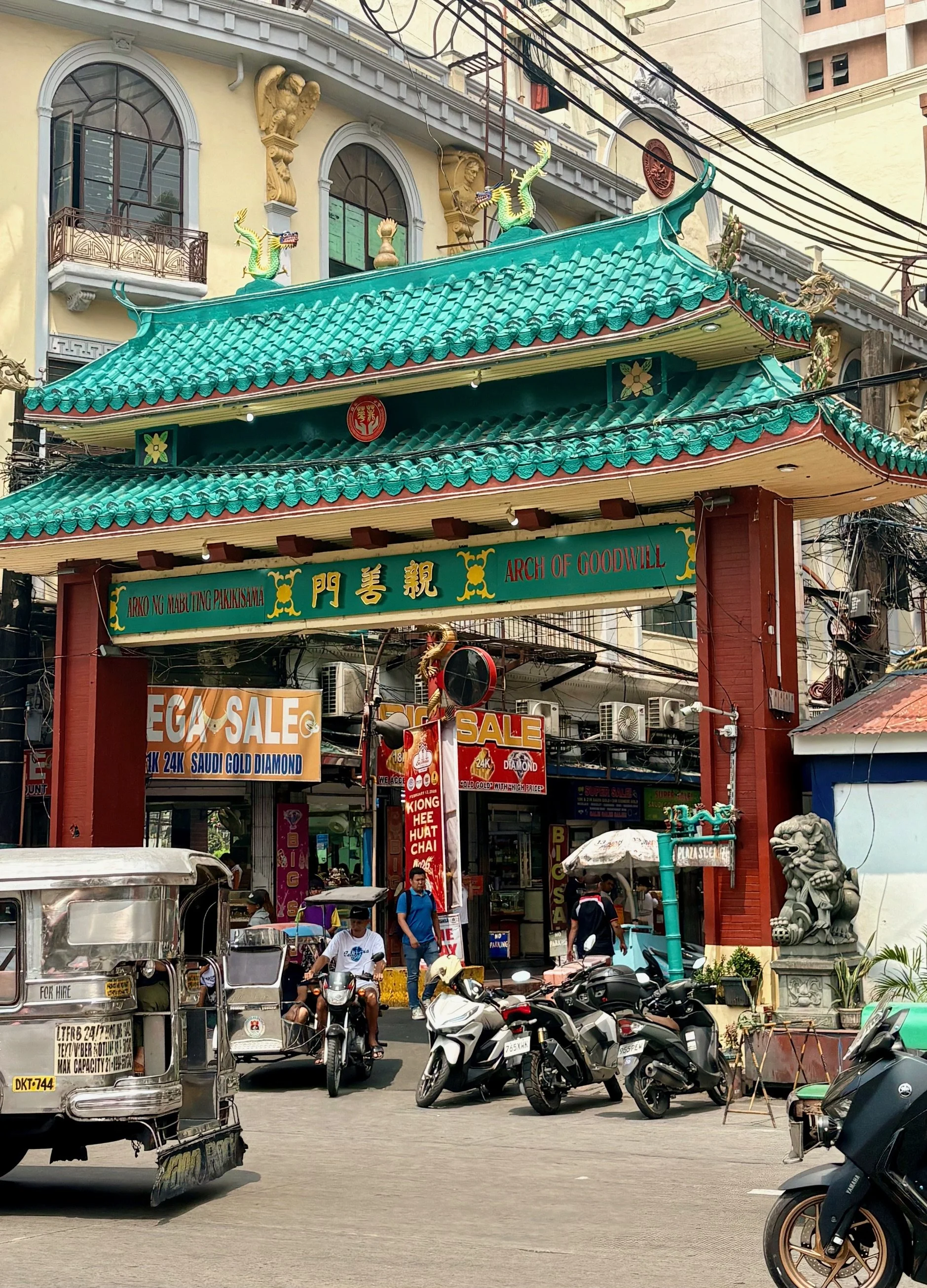
The world’s oldest Chinatown is alive—and layered with contradiction
photo by emilie k adin
Established in the 1590s under Spanish colonial rule, Binondo is the oldest surviving Chinatown outside China. It is vibrant, bustling, and very much alive today, hosting cultural and food tours that draw both locals and visitors.
But beneath that vitality lies a more complicated history. As our bike tour guide explained, only Chinese residents who converted to Catholicism were initially permitted to live there. These Catholic Chinese were also the only ones allowed to trade or operate businesses within Intramuros—the walled city.
Inclusion, here, was conditional.
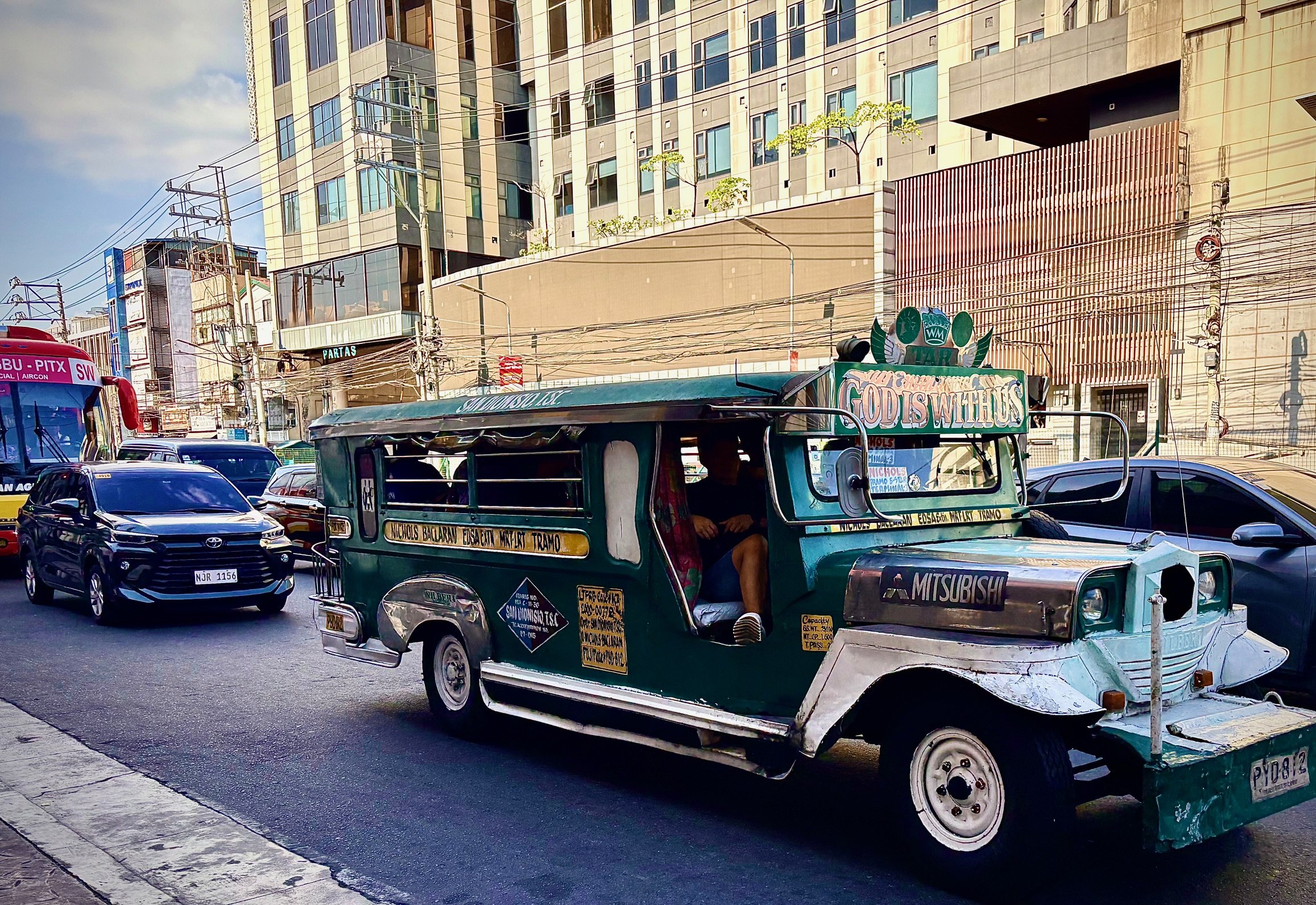
Private transit systems are not peripheral—they are essential
photo by emilie k adin
Manila’s bus system is publicly regulated but—on the most part—privately operated. Operators require franchises and permits, but within that framework, they function with considerable independence.
More importantly, the city depends on a vast ecosystem of semi-formal transit: jeepneys, shared taxis, motorcycles with sidecar passenger cabins, motorized tricycles, pedicabs—alongside a limited fully-public Light Rail and Metro Rail system.
Jeepneys, originally fashioned from surplus U.S. military vehicles after World War II, are perhaps the most iconic. But they are more than icons—they are infrastructure: the backbone of daily mobility for many working- and middle-class Filipinos.
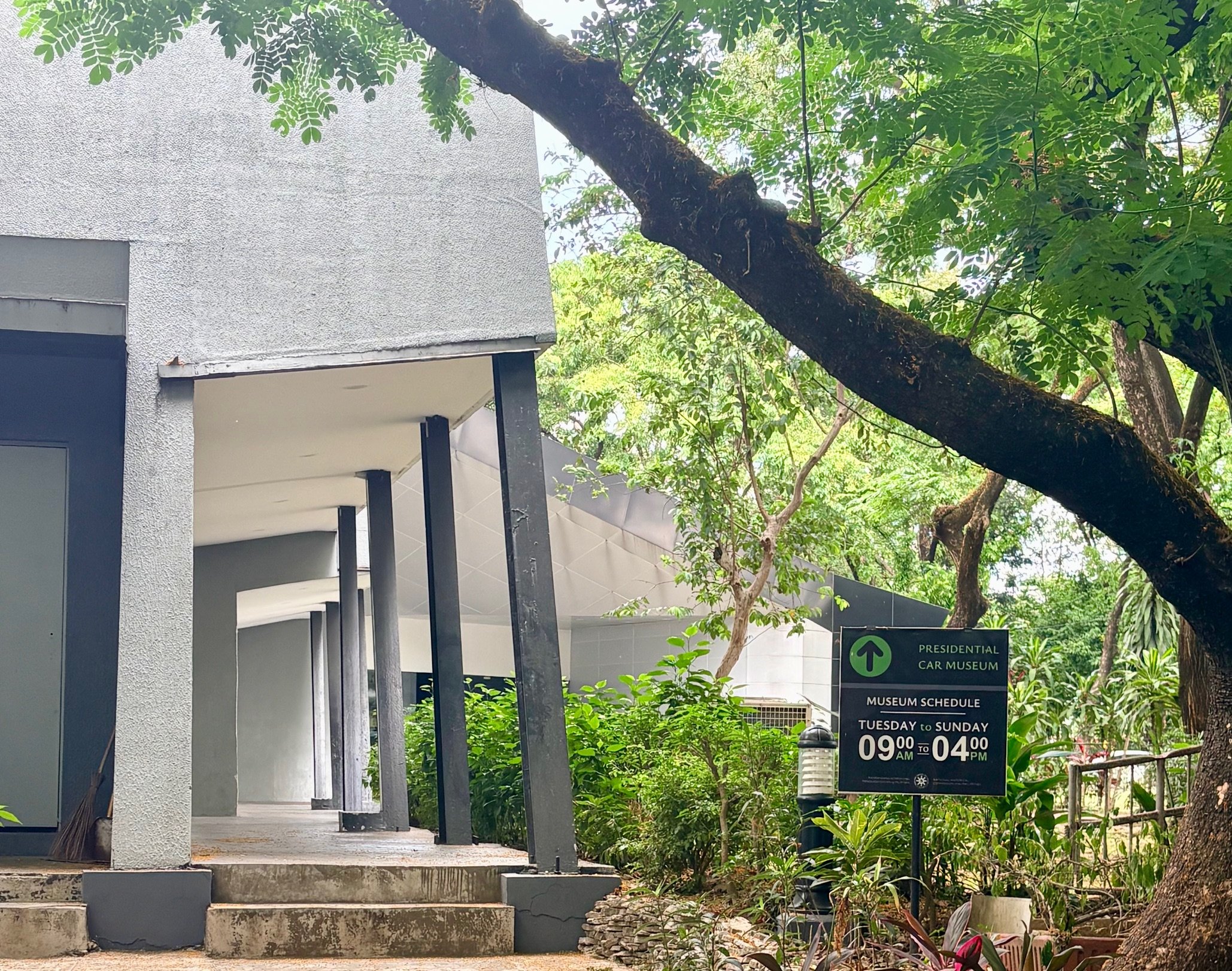
The symbolism of the car runs deep
photo by emilie k adin
Near Quezon City Hall, I stumbled upon the Philippines’ Presidential Car Museum. It is, in its own way, a monument to the unwavering place of the car in the cultural imagination of the Philippines.
Only a handful of countries—perhaps Russia and Jordan among them—have museums dedicated solely to the vehicles of their leaders. That is telling.
Inside the Philippines’ Presidential Car Museum, Cadillacs, Lincolns, and Mercedes state cars trace a narrative of modernization—one deeply intertwined with America’s deep influence.
It is not just a collection of vehicles. It is a story about power, aspiration, and the enduring supremacy of the automobile.
Manila has Considerable Spatial Inequality
photo by emilie k adin
Over time, Manila has developed as an “extractive” colonial capital, meaning its urban form was designed primarily to move resources and wealth outward rather than to support balanced local development. It shows.
Under Spain and later the United States, infrastructure concentrated around the port, government districts, and elite enclaves, while Indigenous and working populations were pushed to peripheral or flood-prone districts.
Today’s Metro Manila is a region with stark contrasts—an enduring legacy of colonialism.
Where there’s hope, there’s action, and all is not lost. Filipinos and Filipinas are incredibly strong—indeed, resilient. It will be a steep road to fix what ails this city of the Global South. We all need to support the work of Manila’s Move as One Coalition, the Filipina local activists, and global funders and advocates.
