
Photo-essay: Ten Lessons from Copenhagen
Copenhagen reveals itself in brilliant and caring details. A curb here, a courtyard there, a bike light that doesn’t crane your neck. What follows are ten small lessons, things I have gathered while wandering the city on foot and by bike, that hint at a larger philosophy of good city-building. (All photos mine.)
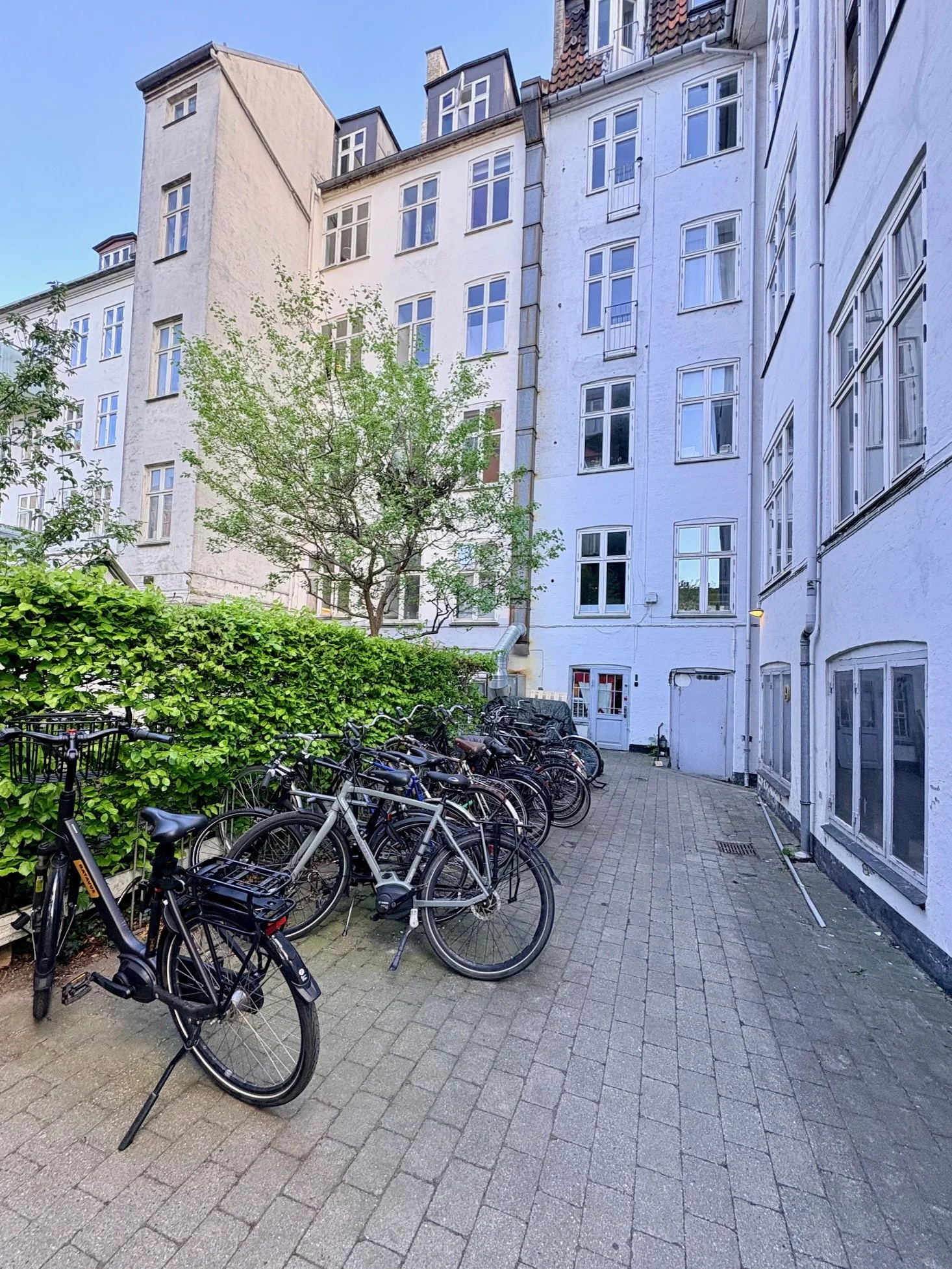
1. Start with the Bicycle, Not the Car
Copenhagen treats cycling as a primary mode of transportation, not an afterthought. Dedicated traffic lights, elevated bike “highways” like Cykelslangen, elegant bike bridges, and even subtle comforts—like footrests at intersections—signal something deeper: respect for the cyclist as part of a good city’s ecosystem.
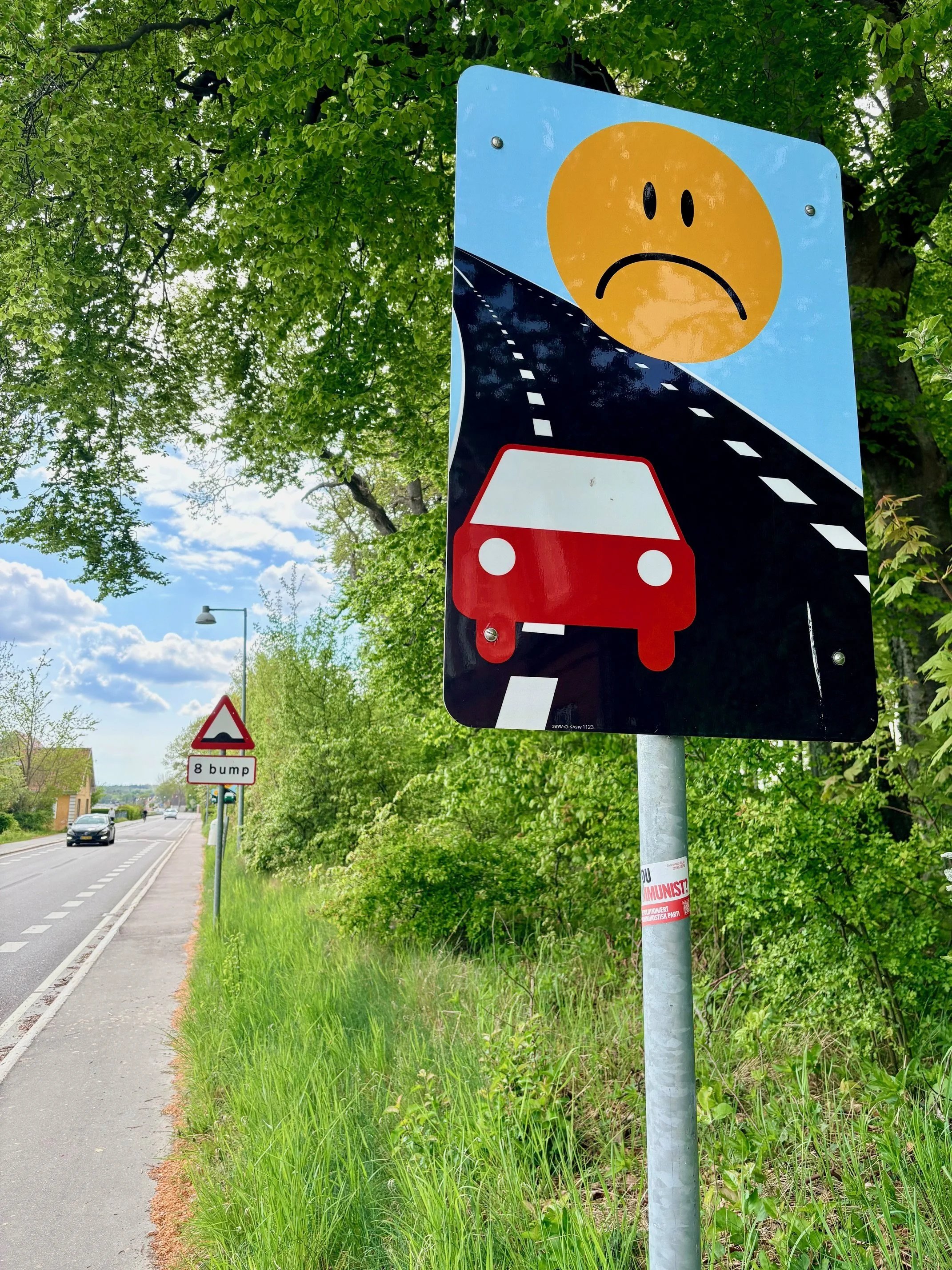
2. Then, Design the Street Around That Choice
Once cycling is prioritized, everything else adjusts. Lane markings go beyond standard sharrows—they communicate hierarchy. Bikes aren’t just squeezed in; we expect them. The visual language of the street sometimes includes great signage.
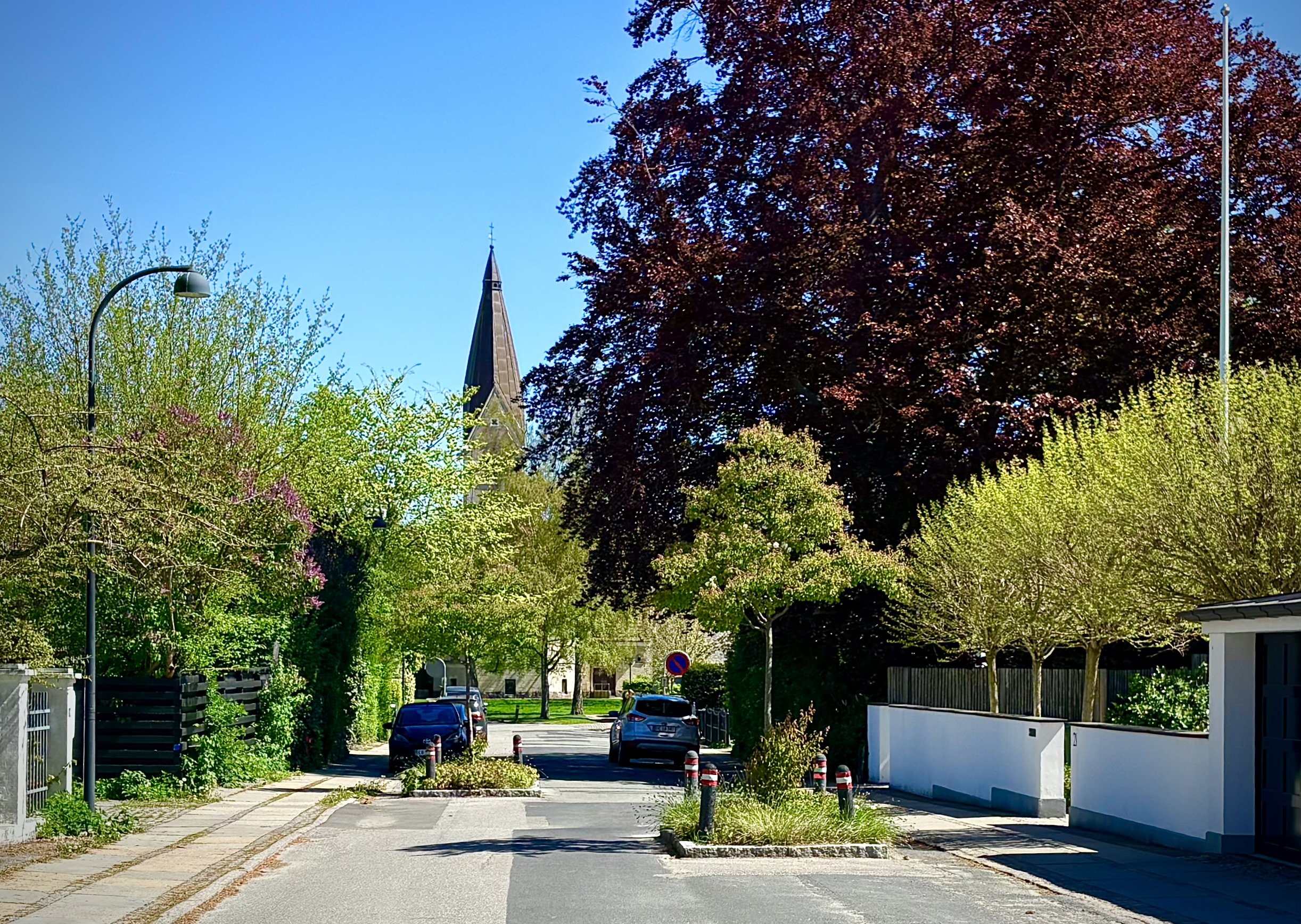
3. Traffic Calming Is a Design Language, Not a Toolkit
In Vancouver, where I live, traffic calming can feel like a limited menu: a speed hump here, a curb bulge there. In Copenhagen, I’m now seeing a broader vocabulary.
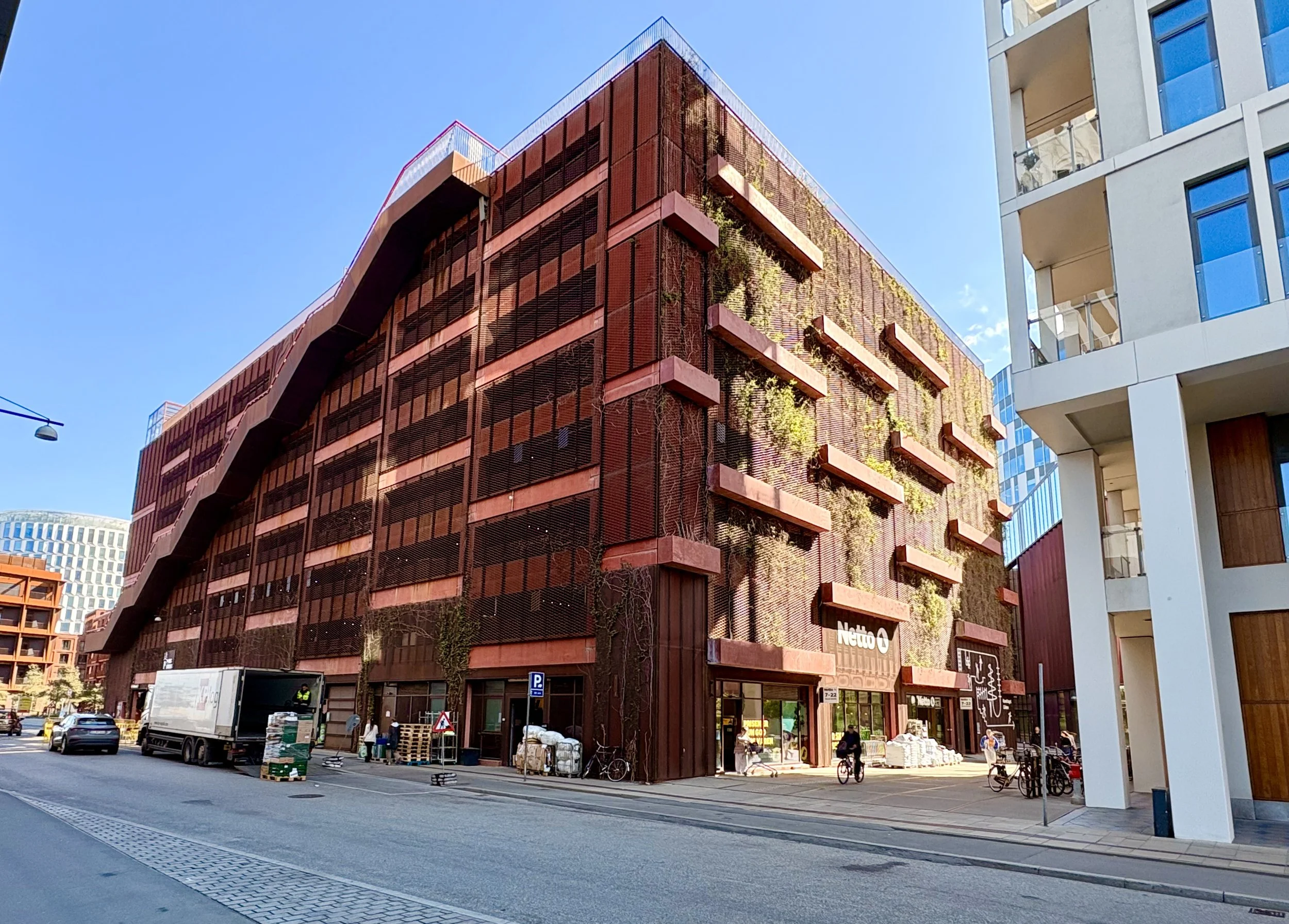
4. Rethink the Parking Garage
Even the most utilitarian building types are treated as design opportunities. Parking garages here—and in places like Paris—can be sculptural, playful, even beautiful. A quiet reminder: no building is too mundane to matter.
5. Big Ideas, Local EXECution
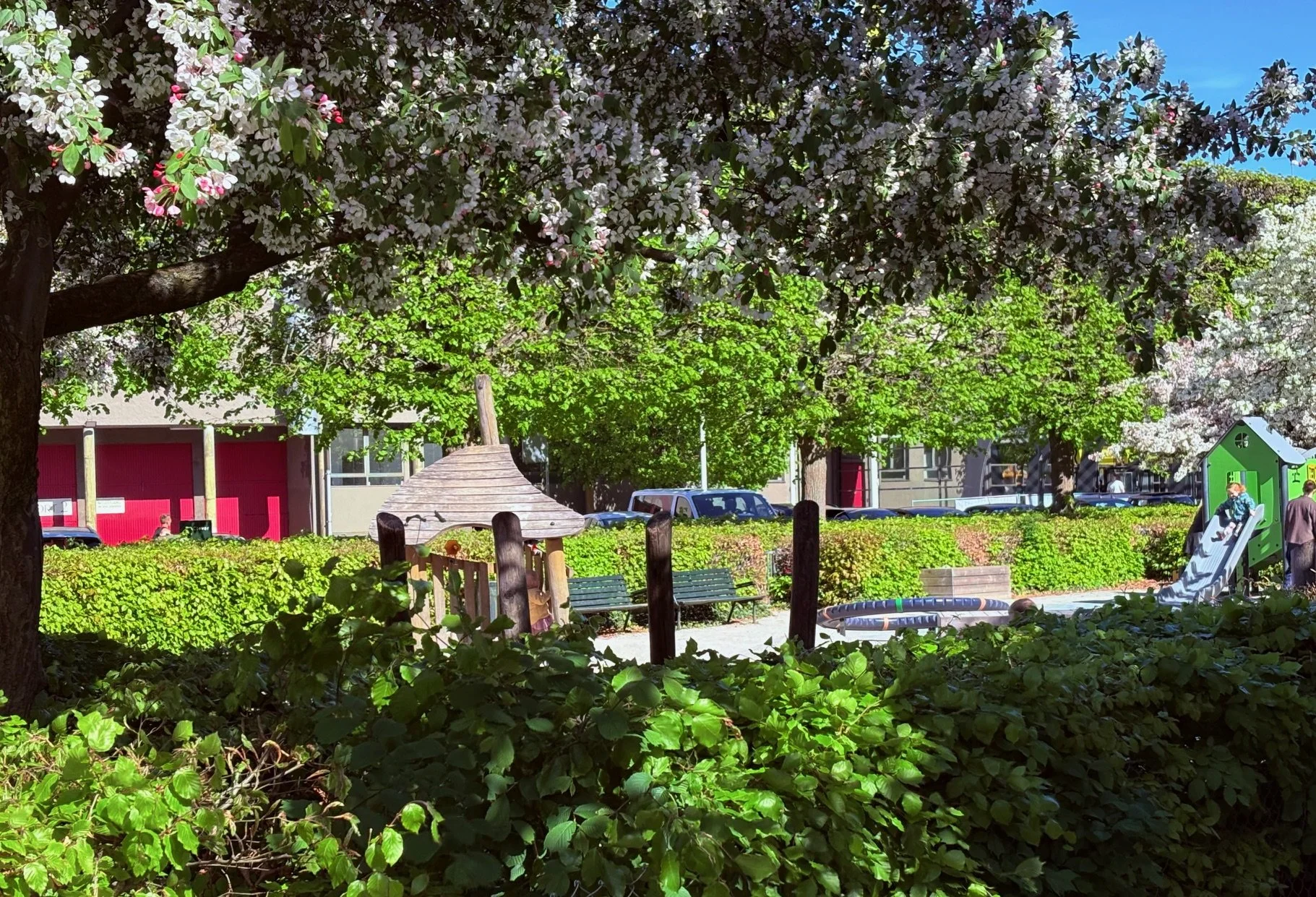
Neighbourhoods like Frederiksberg echo the spirit of the Barcelona Superblocks—low traffic, people-first streets—but without copying them wholesale. Translation, not replication of a great idea in urbanism.
6. Look Inside the Block
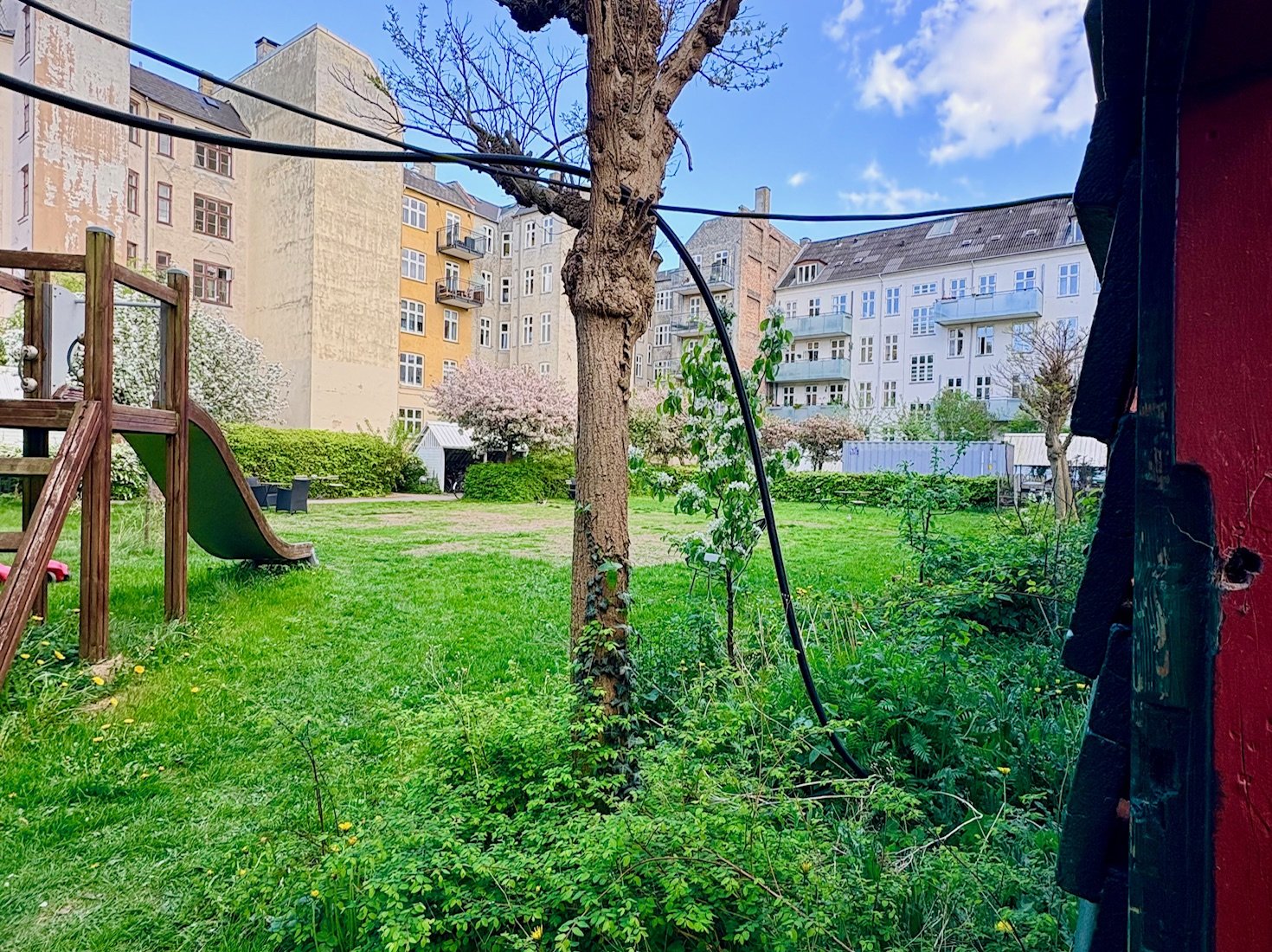
Behind many street-facing buildings in the city’s old quarters lie courtyards filled with life: playgrounds, gardens, and shared spaces. These semi-public interiors soften density, turning what could feel tight into something generous and communal.
7. Treat Construc-tion as
Part of the Public Realm
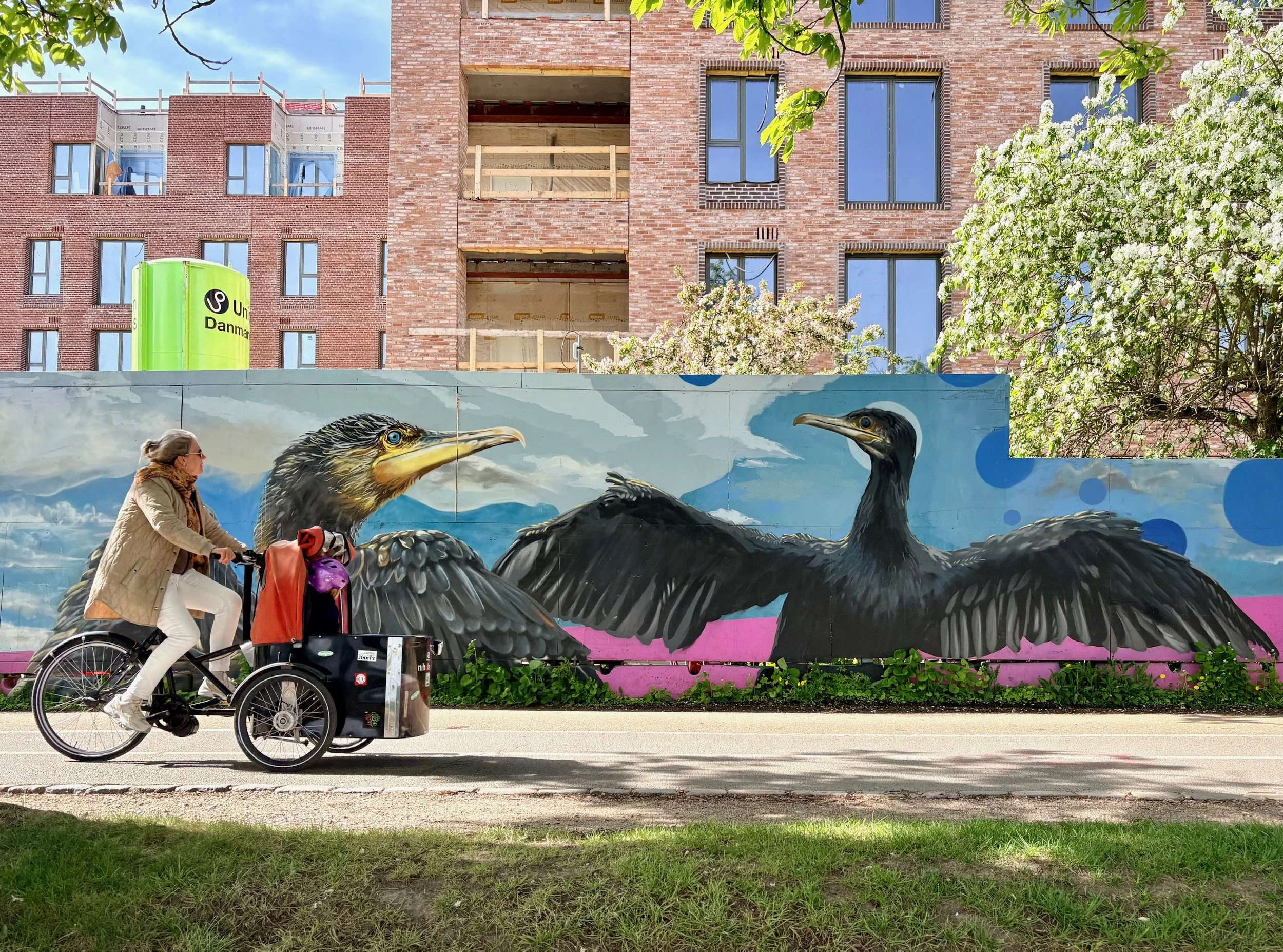
Even construction sites contribute to the city’s texture. Hoardings become canvases for murals, adding colour and narrative to what might otherwise be disruption. The city remains visually engaging—even mid-transformation when projects are underway.
8. Make Transit Feel Effortless
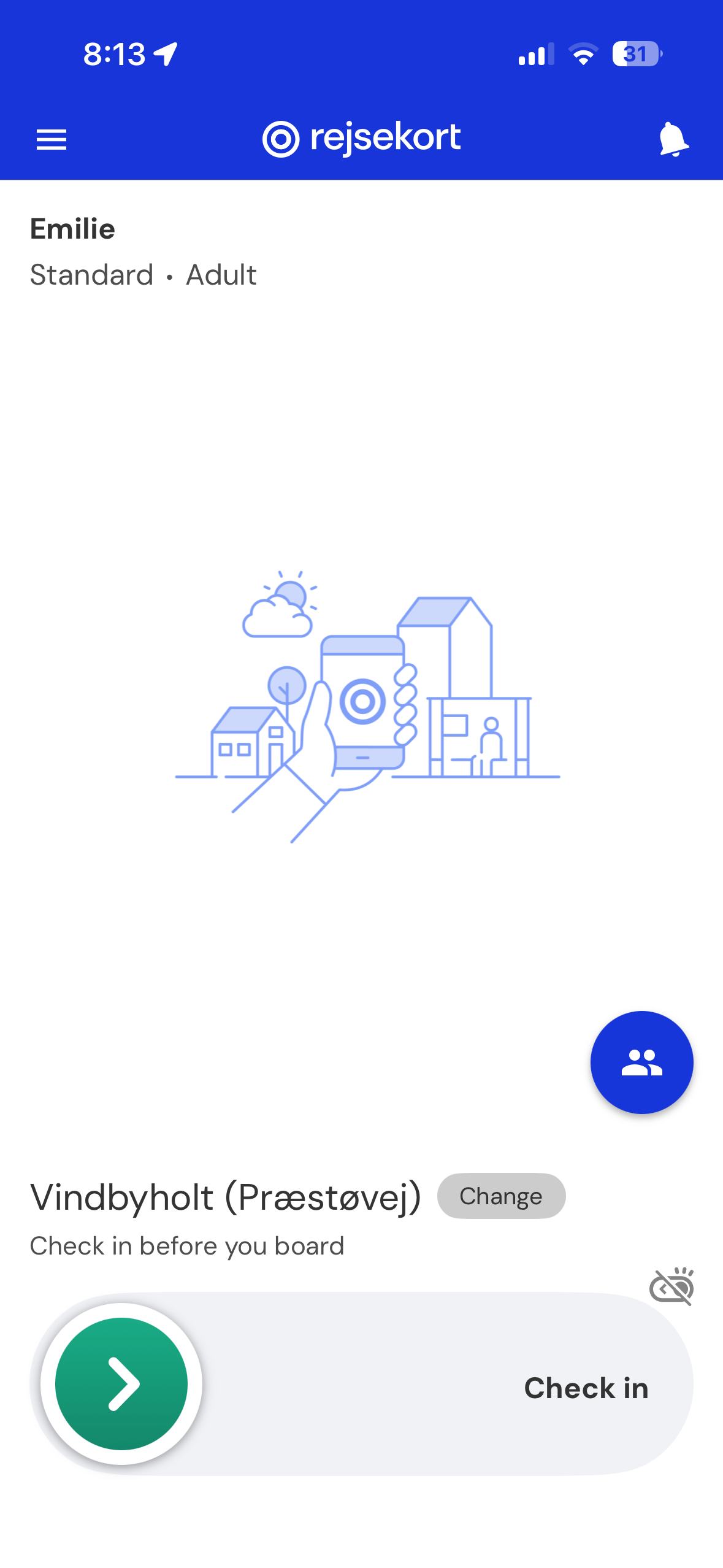
Copenhagen’s transit system is fast, clean, and intuitive—once you crack the code of payment. The movement from A to B even when switching lines and modes feels seamless, which is what riders remember.
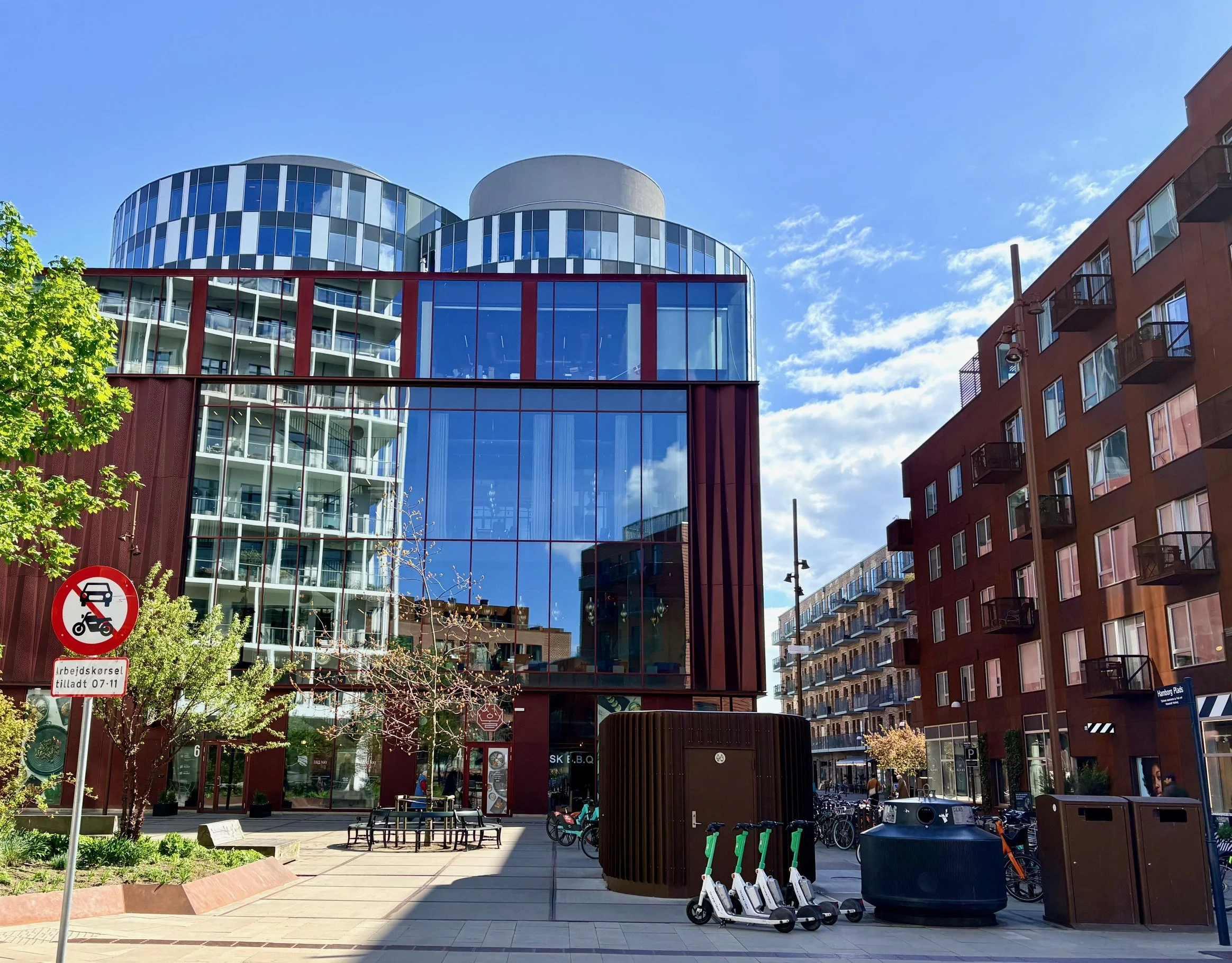
9. Honour the Past Without Freezing It
Former industrial areas—like parts of Nordhavn, or North Harbour—retain echoes of their past through materials and colour. Rust tones, exposed steel, brickwork and rugged forms carry memories from another time forward, into today.
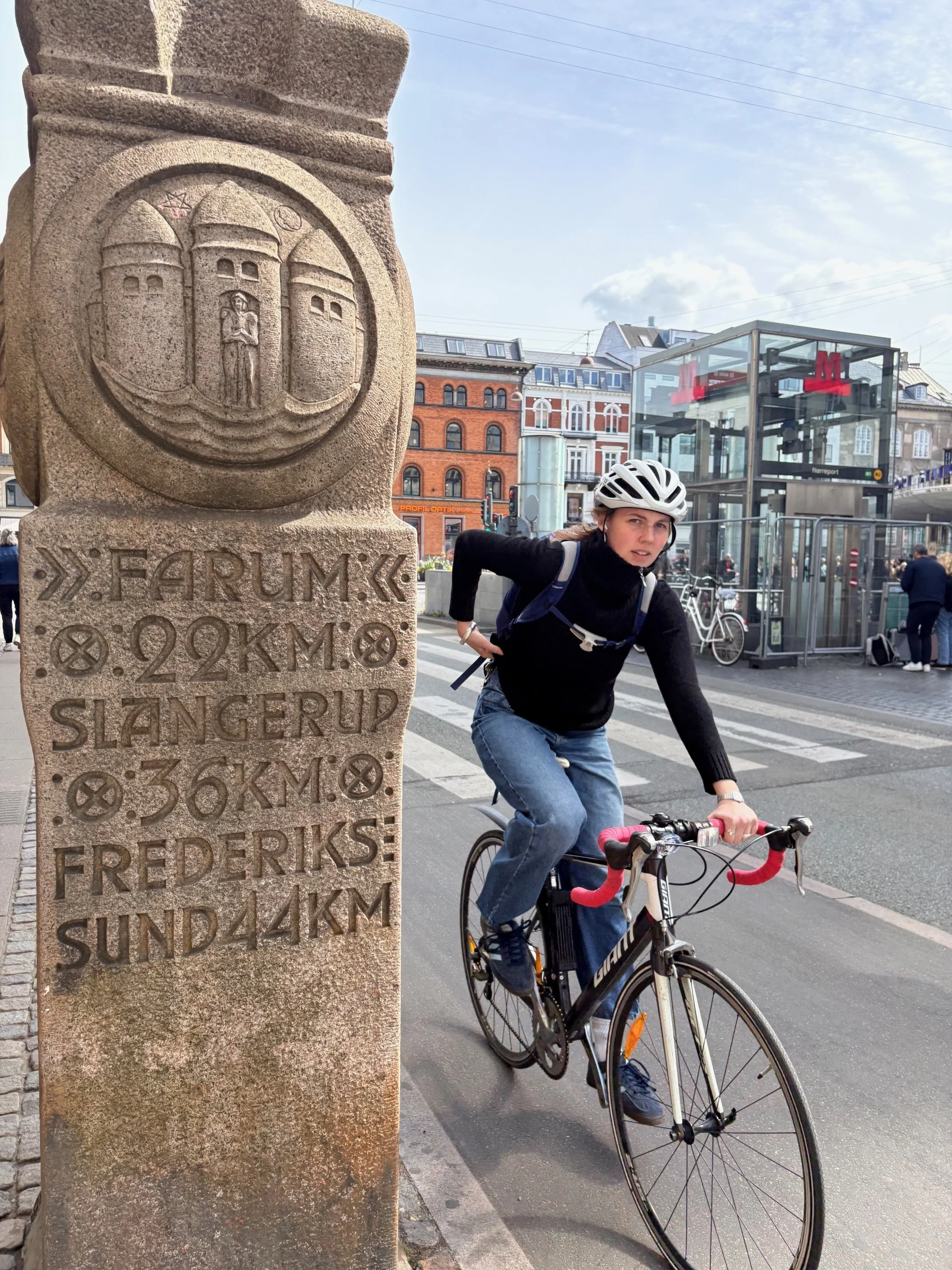
10. Let Old and New Speak to Each Other
One of Copenhagen’s quiet triumphs is its comfort with juxtaposition. A sleek Metro elevator beside centuries-old buildings and a medieval wayfinding post doesn’t feel jarring—it feels honest. Cities are layered. Copenhagen lets you see the layers.
Conclusion: A City That Sweats the Small Stuff
None of these ten lessons are revolutionary in themselves. But together, they reveal a city that cares deeply about how things feel for people at a pedestrian, cyclist, and ultimately human scale—how comfortable the cyclist feels who pauses at a light, how much enjoyment a child feels playing in a courtyard, how nicely a passerby can experience construction hoarding, bright even on a cold rainy day.
Copenhagen’s secret isn’t perfection. It’s attention to details that matter.
