
My Twelve Top Takeaways From Hong Kong
Hong Kong is a city that refuses flatness. Streets climb. Buildings stack. Meals are sometimes hidden away from me, several storeys above the pavement. Even civic generosity arrives vertically, in the form of escalators that lift you through central neighbourhoods like a promise kept. Moving through the city, I felt both like I was invited forward and quietly constrained. Nothing here is simple—but so much is remarkable.
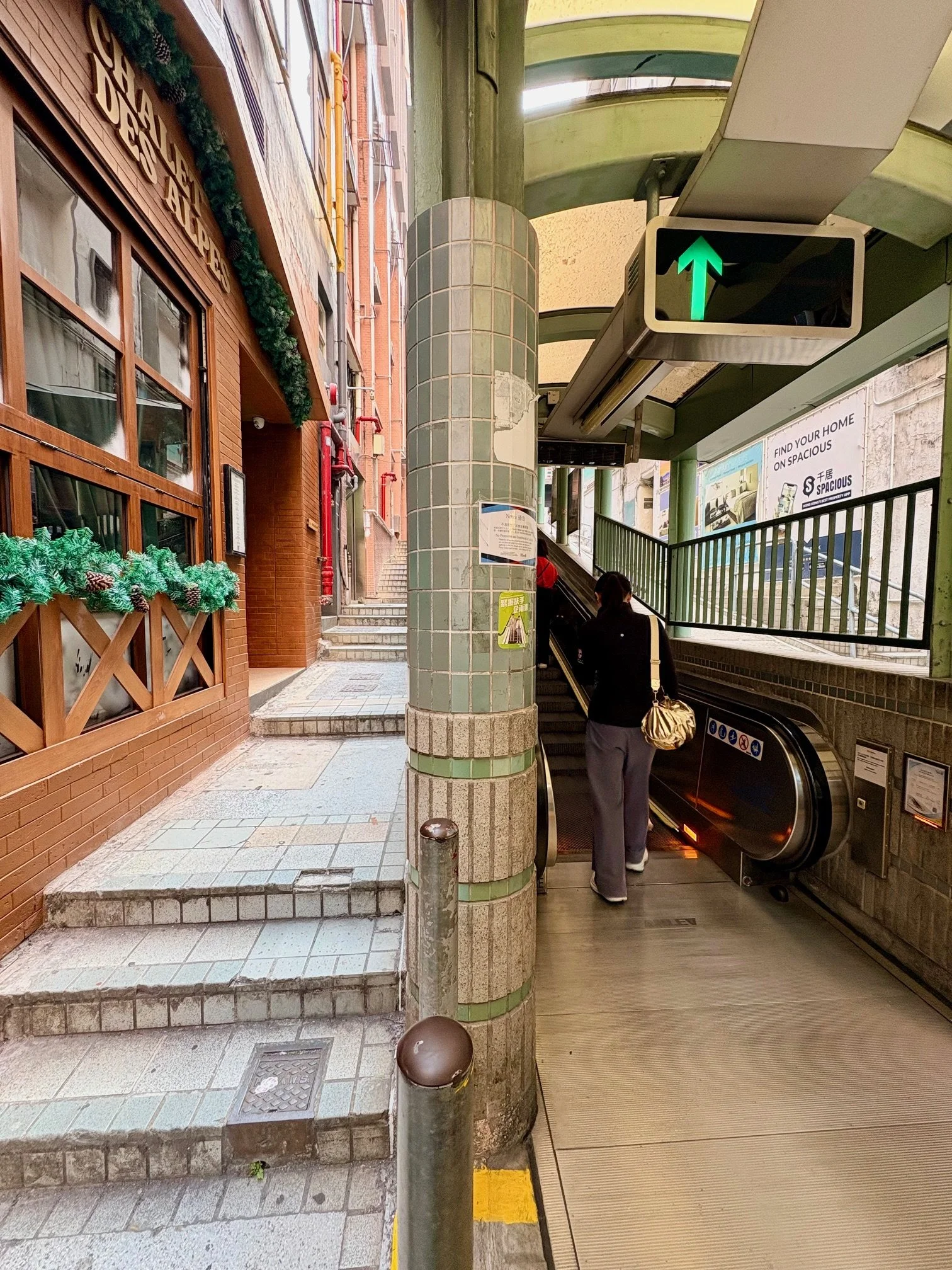
1. Escalators as everyday infrastructure
Photo by the author.
The Central Area’s Escalators feel less like infrastructure than absolution. They forgive the body for its limits. They admit that a city can be spectacularly steep and still choose not to punish you for it. Office workers, shoppers, tourists—all rise together on the free open-air escalators, step by step, carried through streets that might otherwise separate the able from the exhausted.
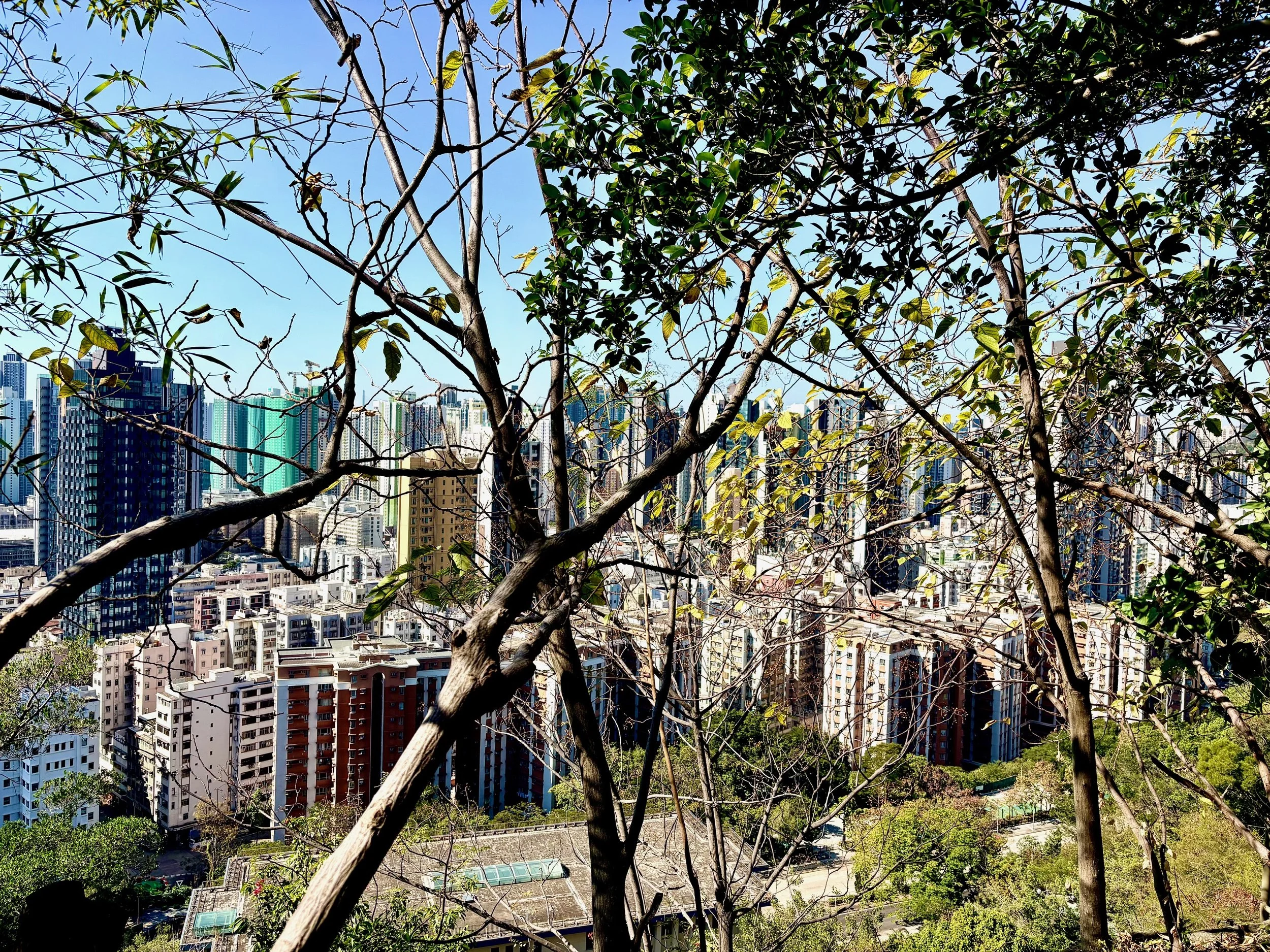
2. Skyscrapers that refuse to be singular
Photo by the author.
In Hong Kong, even tallness is provisional. A tower asserts itself, only to be dwarfed by another—twice or three times as high—looming behind it like a rebuttal. Buildings press close to one another, competing for light and air, forming a skyline that feels restless, not resolved. The city grows upward as a practical response to many constraints—water, mountains, port lands, the limits of growth.
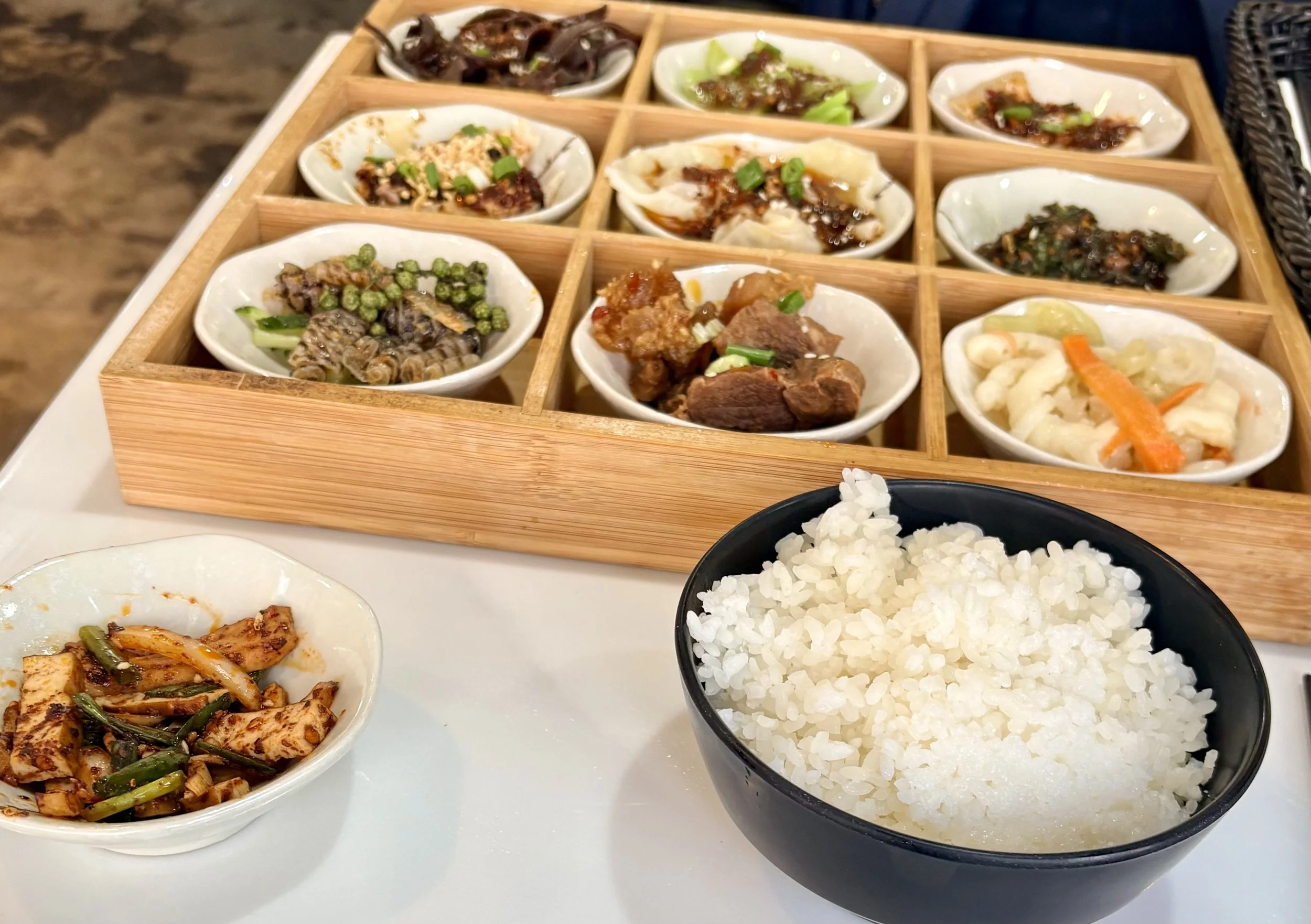
3. Excellence tucked away
Photo by the author.
Some of the city’s finest meals are hidden far from the street, up narrow elevators and along dim corridors. I ate at a restaurant on the eleventh floor of a slim retail tower, the kind you might pass without noticing. In Hong Kong, quality does not always rely on visibility. Quality sometimes assumes you will seek it out—or stumble upon it—and rewards you when you do.
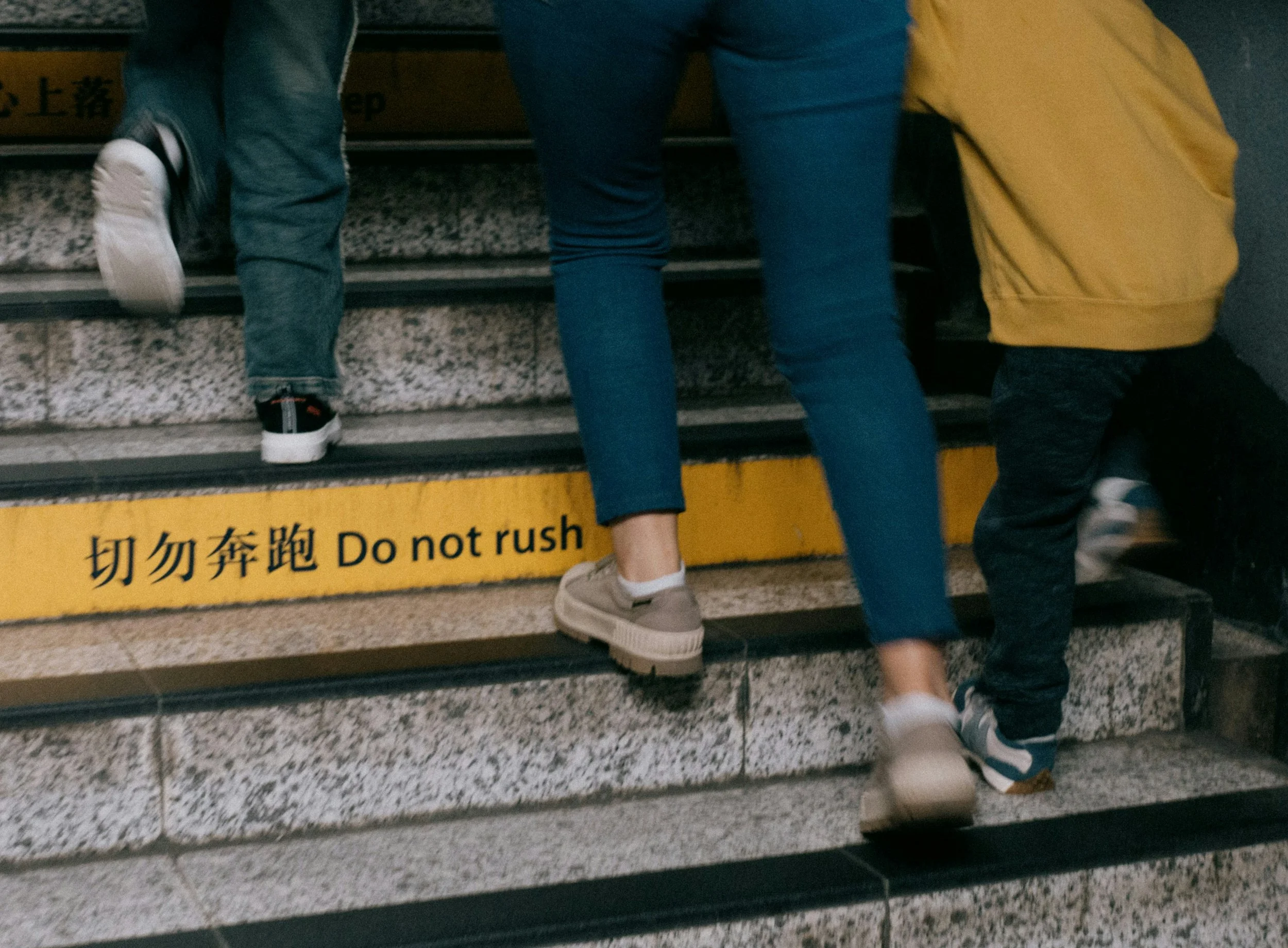
4. Accessibility as an unresolved ethical problem
Photo by Catgirlmutant on Unsplash.
The city’s topography makes accessibility feel less like a design oversight than a moral puzzle without clean answers. Ramps and elevators can arrive only by erasing something else—heritage, slope, texture. Hong Kong doesn’t hide this tension. It lives with it, imperfectly. And so too does anybody moving through Hong Kong’s public spaces. The result is a city that reveals the limits of design.
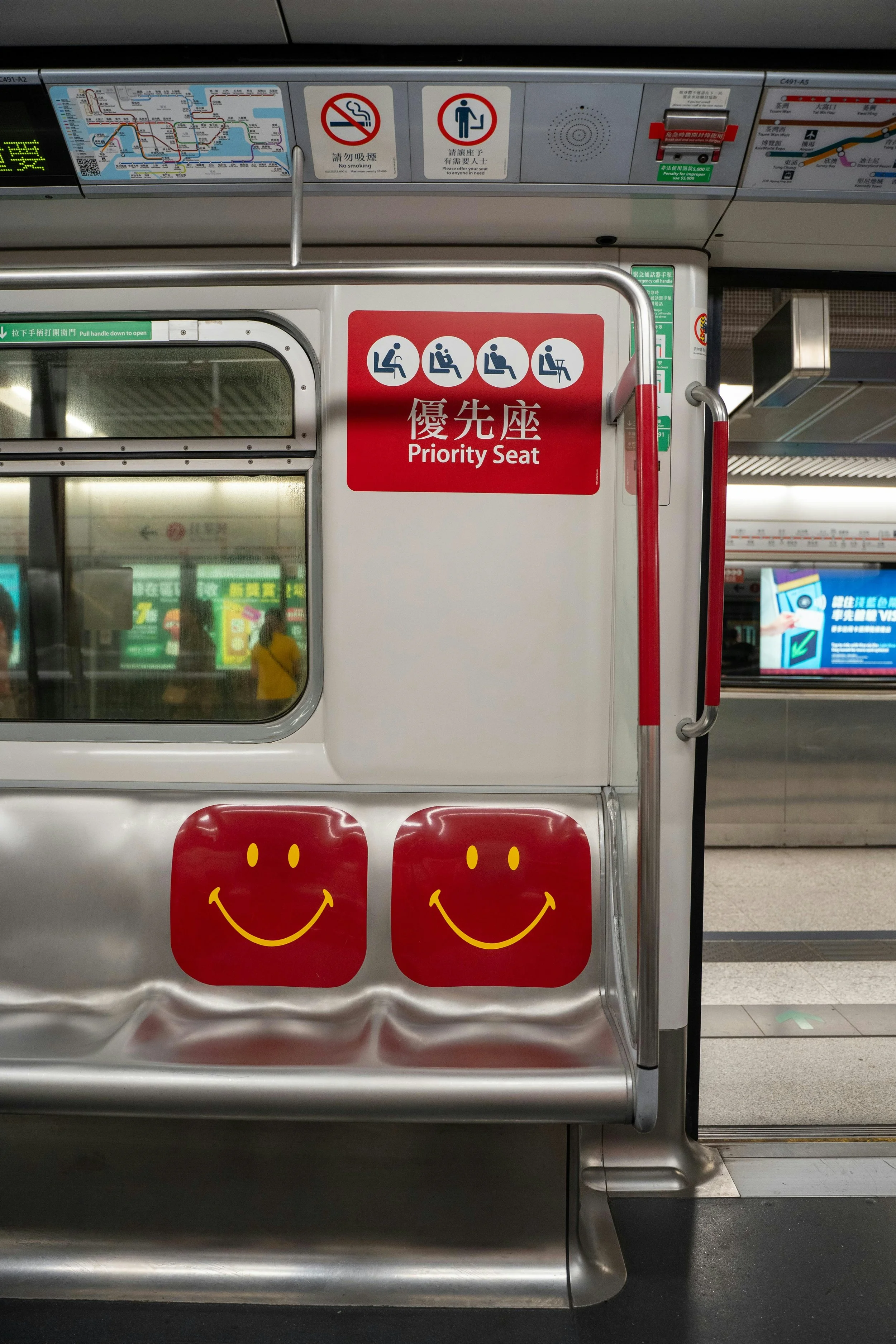
Hong Kong’s public transit system is remarkably integrated. Subways, ferries, double-decker buses, and public light buses operate as parts of a single network—each mode distinct, and reliable. The Star Ferry is both commute and ritual, moving people across the harbour while framing the city for them. Transit is the default, the way the city works. No stigma.
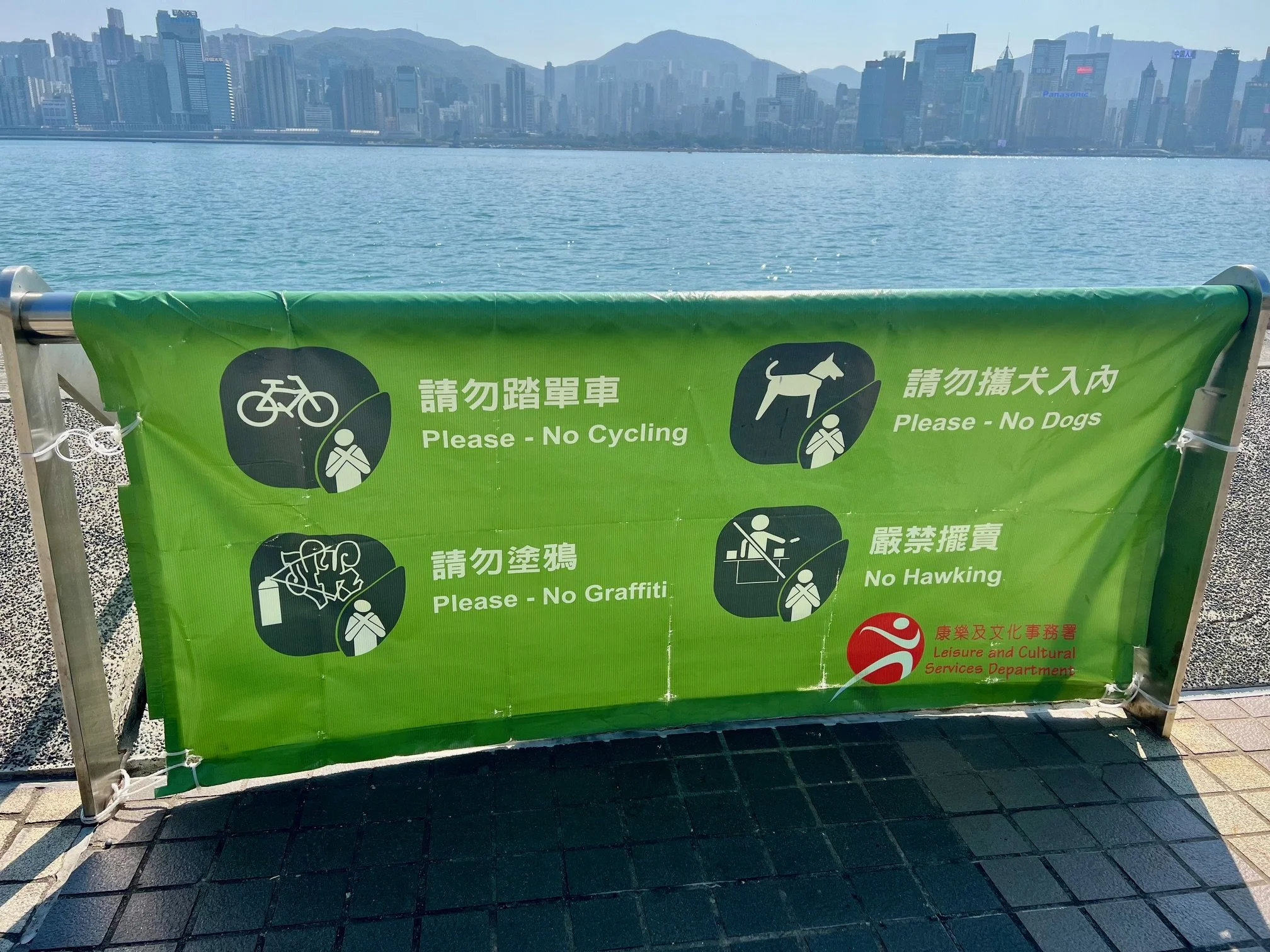
6. Cycling pushed to the margins
Photo by Bruce McIvor.
Cycling infrastructure is sparse, and in some places explicitly absent. Along certain waterfront routes, bicycles are prohibited altogether. In a city that supports walking and transit so effectively, this omission is striking. It suggests a hierarchy of movement, where some forms of mobility are welcomed and others not-so-quietly discouraged.
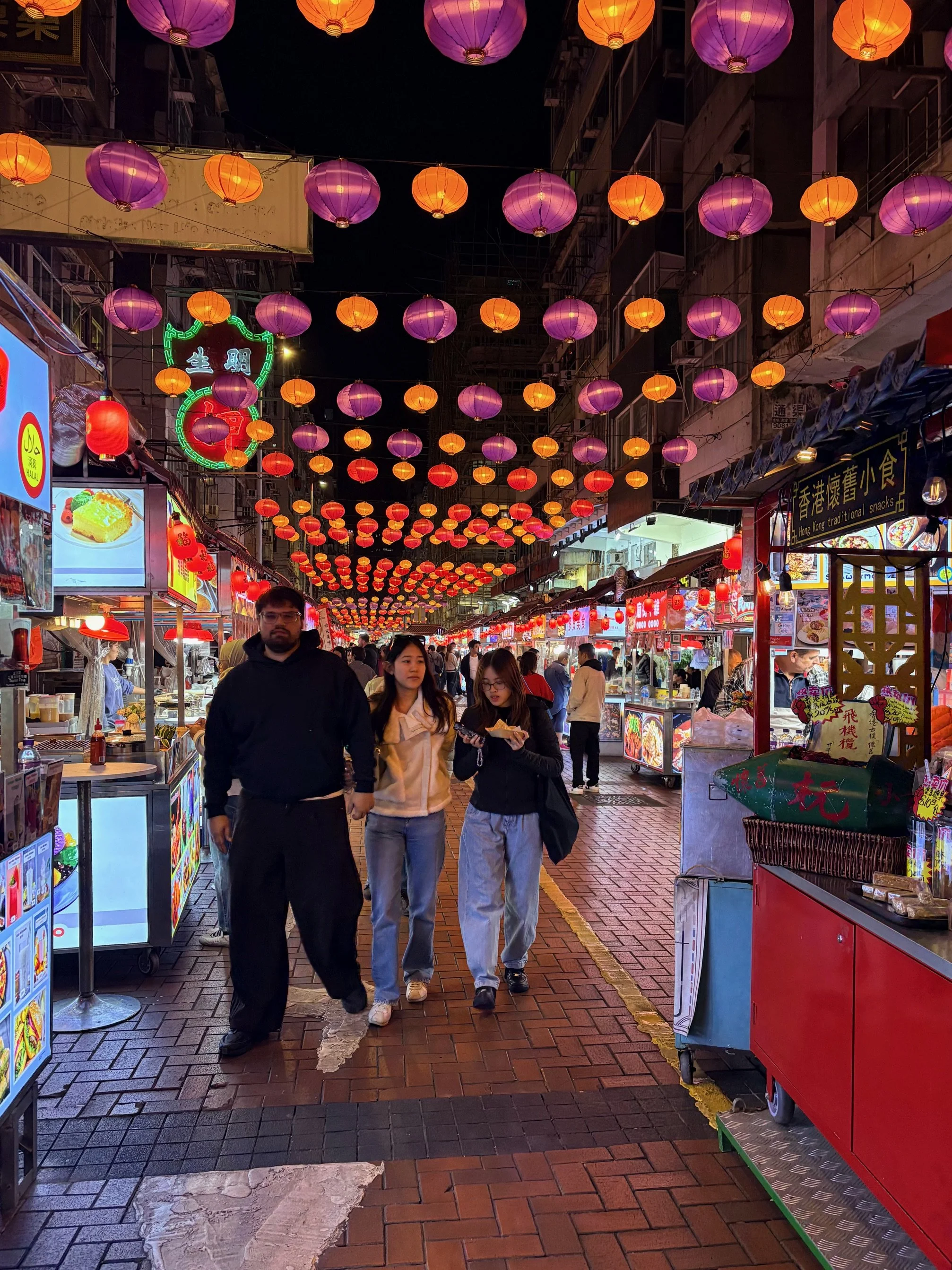
7. Night markets as pockets of softness
Photo by the author.
Hong Kong’s night markets are fewer than elsewhere in Asia, but perhaps that scarcity sharpens their sweetness. They feel like temporary permissions—to linger, to browse, to eat standing up, to let the city exhale after dark.
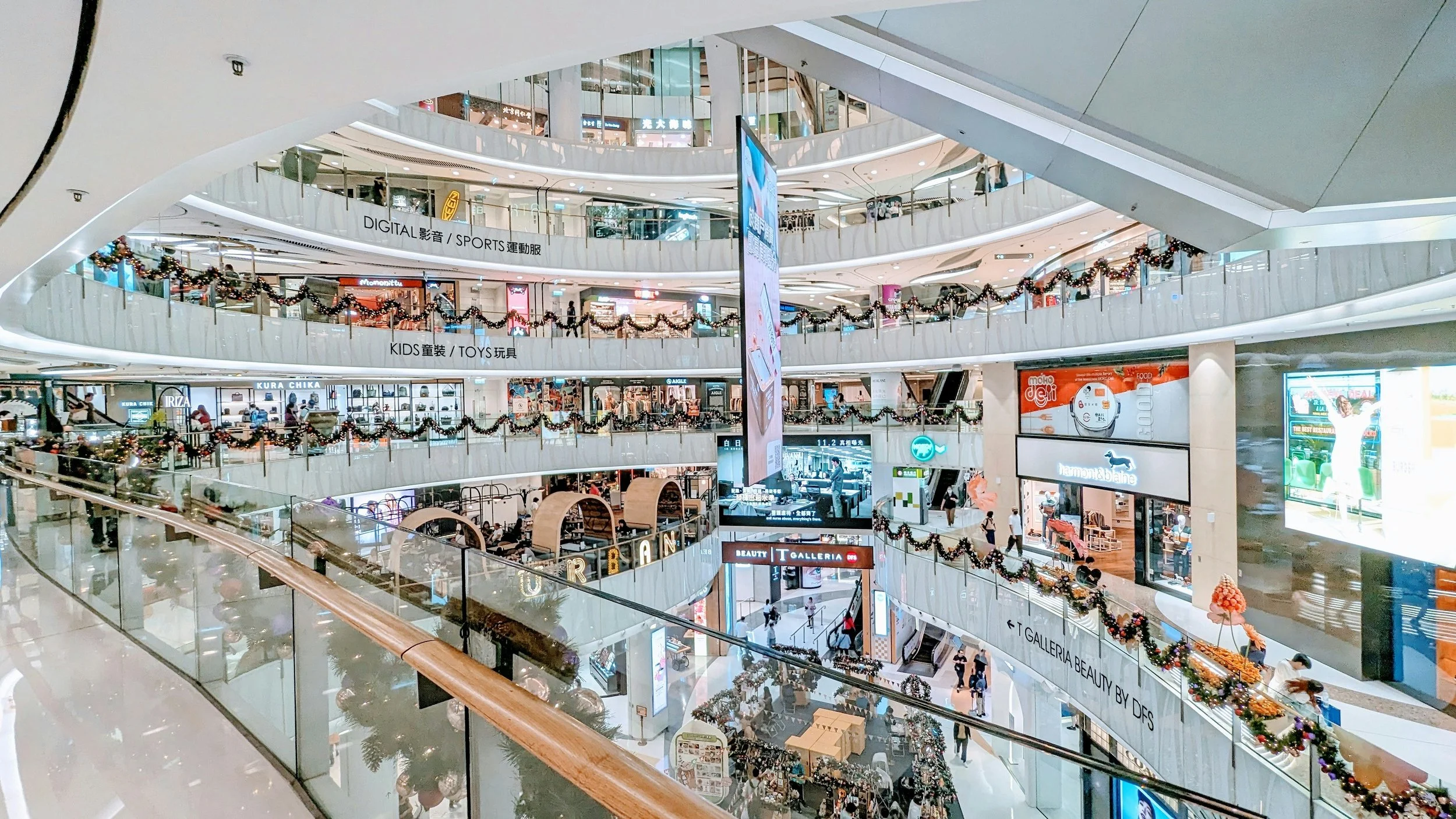
Malls in Hong Kong are not simply places to shop. Underground passages and elevated walkways stitch together towers, transit, retail, and weather protection. The result is a city you can cross through without quite touching the street—a parallel Hong Kong, climate-controlled and continuous. Movement happens on several planes at once—absolutely the wrong urban design to advance in any city with less density than Hong Kong, or it will kill the life of the street.
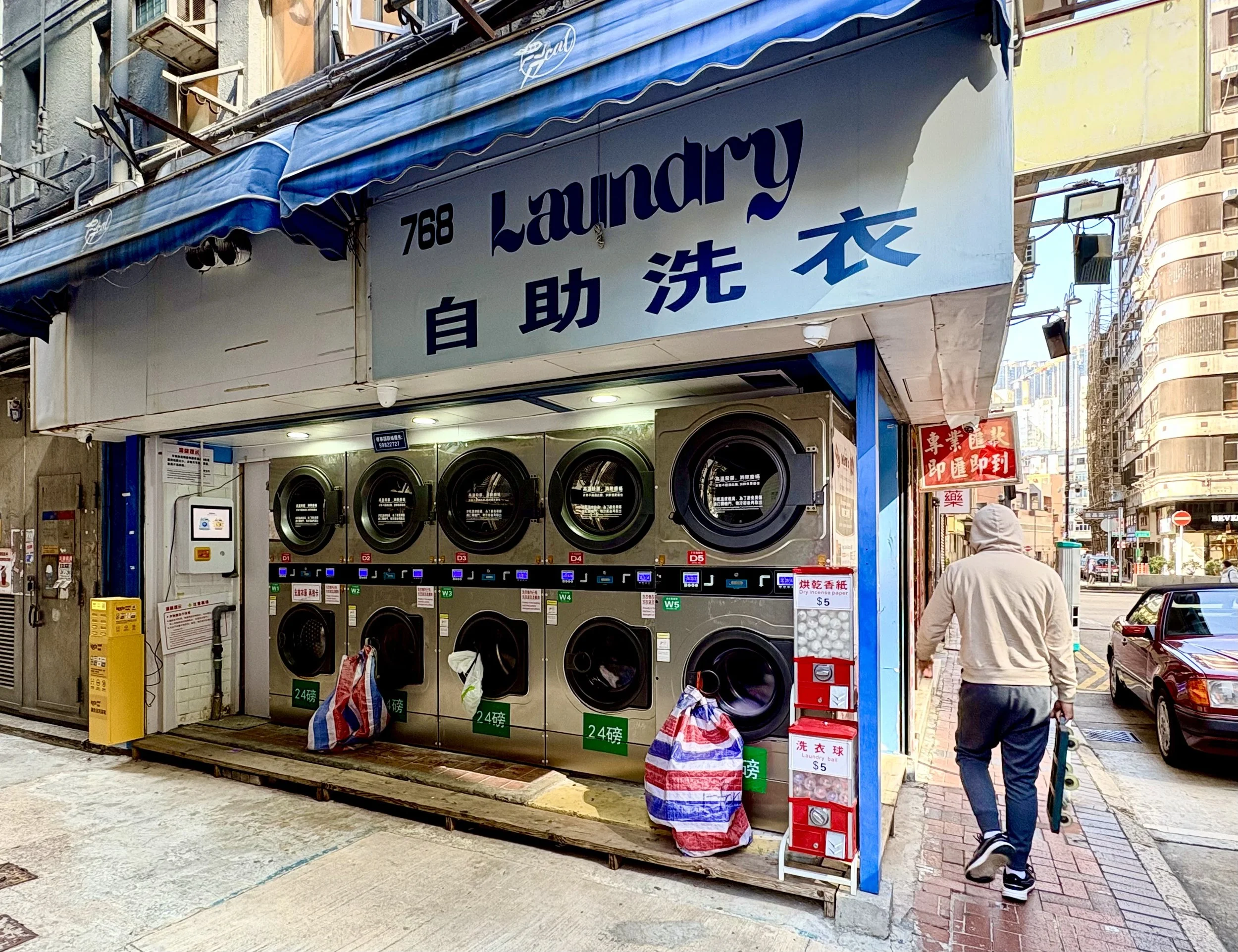
9. Retail without walls
Photo by the author.
Washing machines open directly onto sidewalks. Vending machines dispense beauty products from entire wall-length installations. Streetfront retail here meets daily needs by folding commerce into the ordinary rhythm of the street. The city sells what you need, where you are, without ceremony.
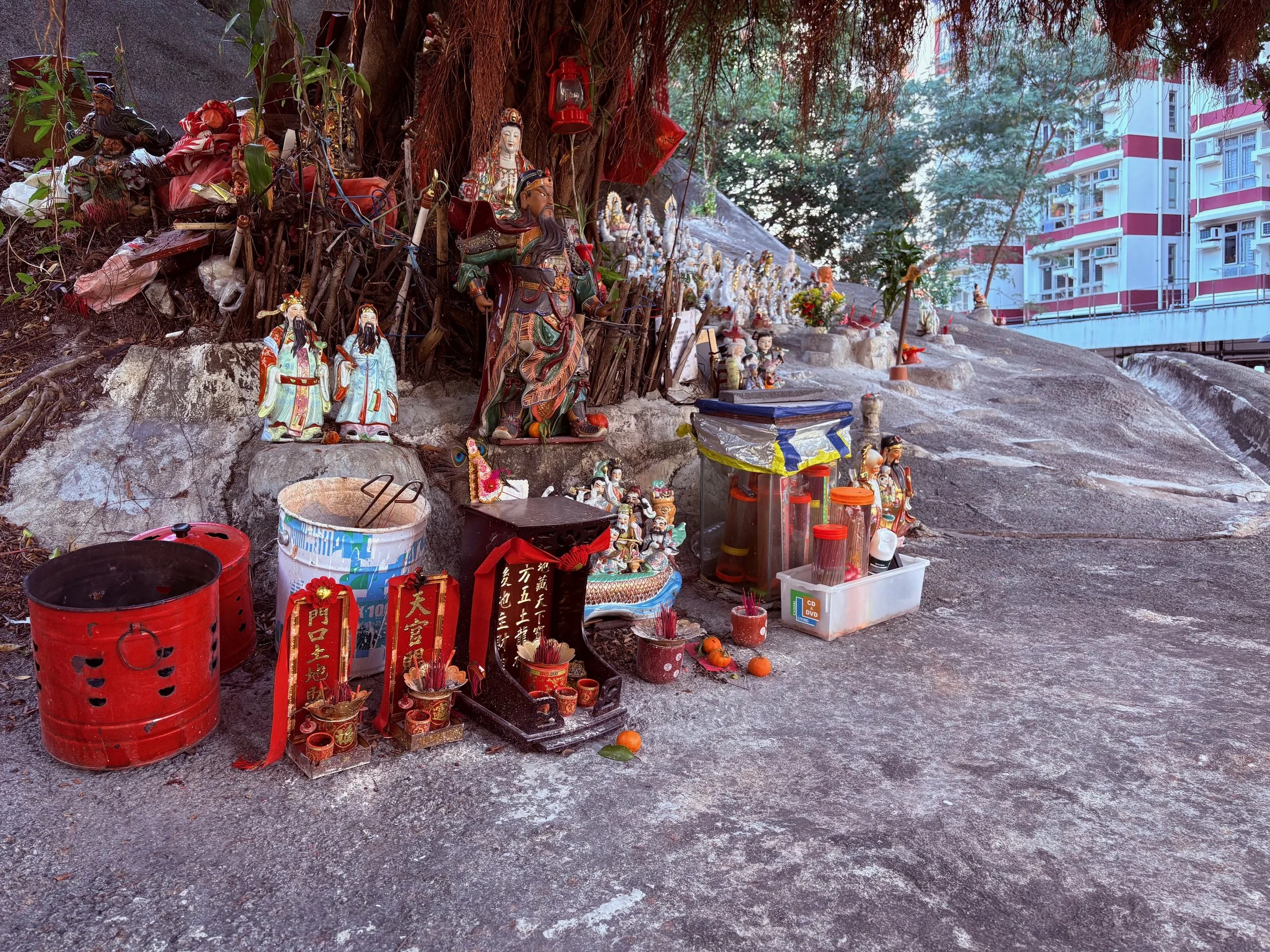
10. Park Up Hill: effort rewarded
Photo by the author.
“Park Up Hill” feels less like a proper name for a park than an instruction. You climb, and the city gradually unspools beneath you. Shrines, flower gardens, private acts of care appear along the way up the hill. The view at the top isn’t just panoramic—it’s earned.
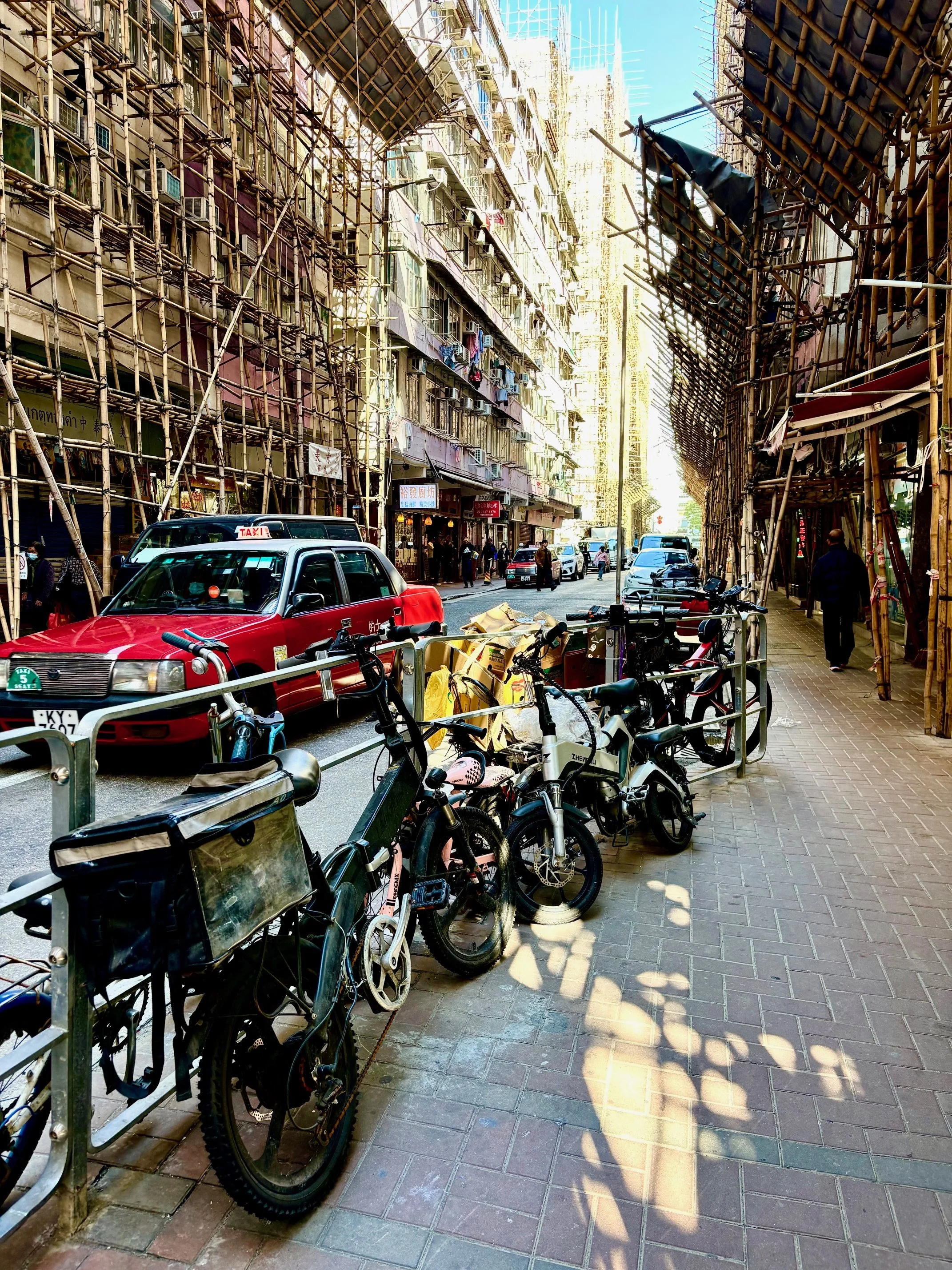
11. Bamboo scaffolding: elegance and risk
Photo by the author.
Bamboo scaffolding is everywhere—flexible, fast, vernacular. Recent fires covered by global news sources complicate the romance. What once read as ingenuity now carries unease. Hong Kong asks you to hold both truths at once: the beauty of tradition and the tension of enhanced scrutiny.
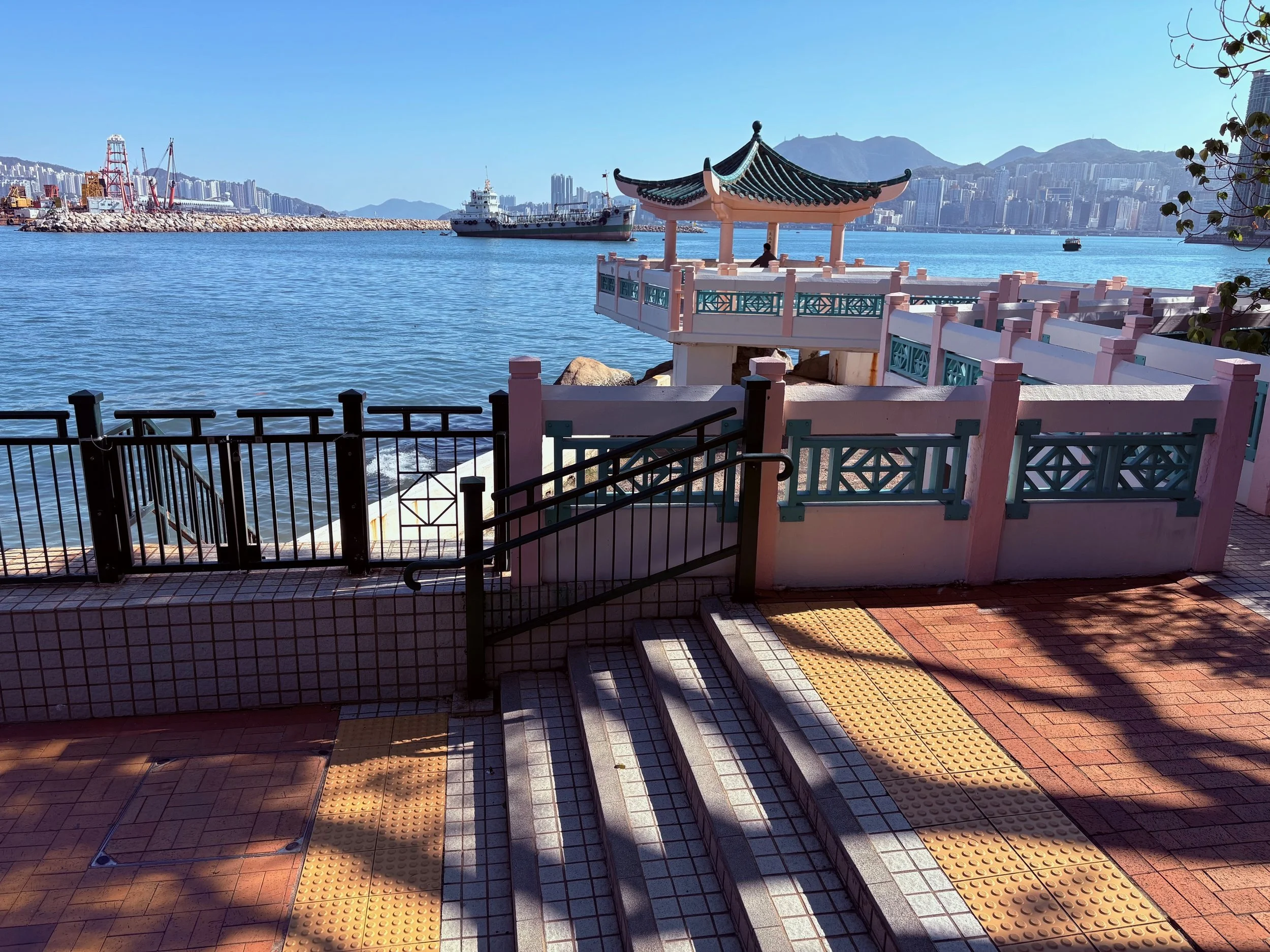
12. Water within reach
Photo by the author.
For a city with port lands that are remarkable relative to its population and size, access to water across Hong Kong is surprisingly good. Promenades, ferries, and views are woven into daily life. The harbour isn’t just scenery; it’s infrastructure, memory, and relief.
In the end, Hong Kong is best experienced in motion: rising on escalators, ferrying across water, threading through malls, climbing towards a view. The city carries you forward, then asks you to adjust your stride. Hong Kong is never neutral, never finished. The city reasons with your body. You feel Hong Kong’s urban planning decisions in your legs and lungs, shaping every step.
